


Rwanda hosts global symposium on open-source solutions for energy access
 Uwimanimpaye Cyiza Marie ClemenceOctober 27, 20267 Mins read
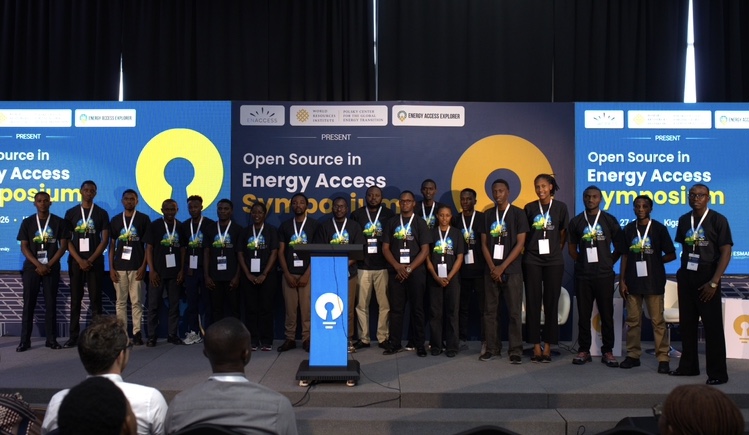
Rwanda is hosting an international symposium bringing together policymakers, researchers, energy companies, investors and technology developers to explore how open-source solutions can accelerate electricity access, as the country launches a digital platform to support energy planning and investment decisions.
The third edition of the Open Source in Energy Access Symposium (OSEAS) opened in Kigali on October 26, bringing together participants to share technologies, strengthen collaboration and address challenges facing the energy access sector.
The two-day event, hosted at Carnegie Mellon University Africa, is co-organised by the EnAccess Foundation, the World Resources Institute (WRI) Polsky Center for the Global Energy Transition and Energy Access Explorer.
One of the main highlights was the official launch of Energy Access Explorer (EAE) in Rwanda, an open-source geospatial platform designed to help governments, energy companies and development partners identify areas where electricity investments could have the greatest impact.
The symposium also featured the launch of MicroPowerManager (MPM) 1.0, a digital platform designed to help mini-grid operators manage customers and assets, alongside presentations by young innovators developing technologies for the energy sector.
More than 655 million people worldwide still lack access to electricity, according to the symposium organisers, highlighting the need for solutions that can expand access while making better use of limited financial and technical resources.
Rwanda launches energy planning platform
Rwanda’s Ministry of Infrastructure said Energy Access Explorer would help inform the country’s least-cost power development plan and renewable energy strategy by bringing together information about energy supply, infrastructure, population distribution and potential demand.
The platform enables users to examine factors such as solar energy potential, the location of communities, schools and health facilities, agricultural activity, road networks and proximity to electricity infrastructure.
Gen B. Cesar, Chief Technical Advisor to the Minister of Infrastructure, said the platform would help address the fragmentation of information needed to make energy planning decisions.
“Energy planning decisions are only as good as the evidence behind them,” he said, noting that information about where people live, land use and existing electricity supply was often held by different institutions in formats that were difficult to integrate.
“As Rwanda grows its power sector, we need a shared picture to plan well and resilience for affordability and sustainability,” he added.

Cesar said the platform would bring together information on energy supply, demand, infrastructure and productive activities, providing planners and other stakeholders with a common resource for assessing investment opportunities.
The platform was developed through collaboration between the Ministry of Infrastructure, WRI, the Energy Private Developers Association and the African Institute for Mathematical Sciences, among other partners.
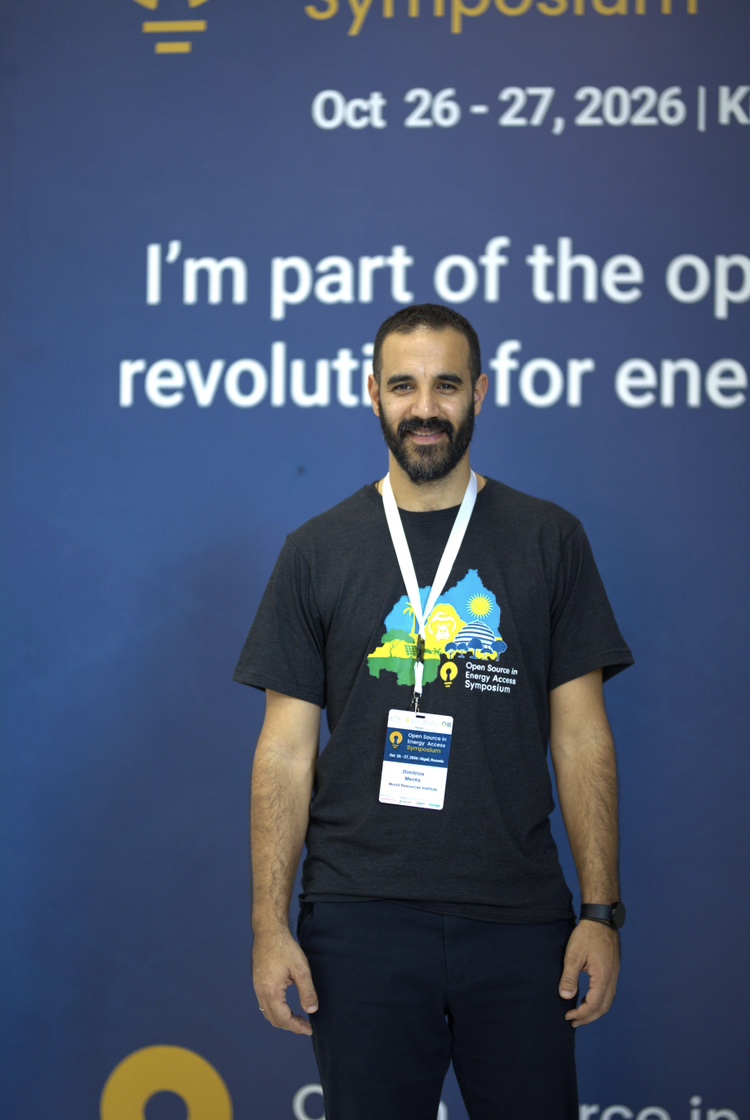
Dimitrios Mentis, WRI’s lead for Energy Access Explorer, described the tool as a way to help governments and businesses make better-informed decisions about where to direct investments.
“Think of it as the Google Maps for energy,” Mentis said, explaining that users can examine a particular location alongside information about its energy potential, population and infrastructure.
Such information can help planners assess potential locations for grid expansion, mini-grids and renewable energy installations before proceeding to detailed feasibility studies.
The platform could also support preliminary assessments of emerging technologies, including floating solar installations, which involve placing solar panels on bodies of water.
Mentis said floating solar was already being deployed in other countries, but determining the most appropriate energy technology required planners to consider both electricity supply and the needs of potential users.
Expanding electricity infrastructure without sufficient demand, he said, could create challenges for both communities and utilities.
By bringing supply and demand data together, Energy Access Explorer can help identify areas where different energy technologies may be more suitable.
Launched in 2019, Energy Access Explorer has been deployed in more than 20 geographies and supported more than 100 governments and institutions, according to the Ministry of Infrastructure.
Its applications in other countries have included identifying off-grid electrification priorities, assessing mini-grid opportunities for agricultural activities and developing national mini-grid databases.
The Rwanda deployment follows two years of work under an energy project focused on strengthening the country’s power-sector resilience through grid-mix optimisation and integrated modelling.
The platform was soft-launched during Energy Week in September, when stakeholders tested it and provided feedback. The public launch marks a further step towards making the tool available for broader use in Rwanda.
The ministry said it would establish a technical working group to coordinate data collection, validation and updates, identify priority applications and support the platform’s long-term use.
Cesar called on local institutions and developers to contribute to its improvement, stressing that the platform’s sustainability would depend on the involvement of those using it.
“The code is open, the data is open. Build on it, challenge it, improve it. That is what open source is for,” he said.
Open-source technology seeks to reduce duplication
Beyond the launch, the symposium aims to strengthen collaboration among organisations developing digital tools and technologies for energy access.
Mentis said the event grew out of a series of online discussions about open-source solutions, during which participants identified the need to meet in person and exchange ideas.
The inaugural symposium took place in Abuja, Nigeria, in 2024, followed by Nairobi in 2025 and Kigali in 2026.
One of its main objectives is to reduce duplication, particularly when different organisations develop similar technologies independently and approach the same governments or energy providers with competing solutions.
Mentis said this can place unnecessary demands on institutions that already face limited time and resources.
Rather than repeatedly developing similar tools, organisations can collaborate, share expertise and improve existing technologies, allowing users to benefit from solutions that are better adapted to their needs.
Eric Ruzigamanzi, WRI Rwanda’s country representative, said the scale of the energy access challenge made collaboration essential.
“Energy access challenges are too large and too complex for any one institution to solve alone,” he said.
“Open-source approaches enable governments, researchers, entrepreneurs and practitioners to build on a shared foundation of tools, data and expertise rather than starting from scratch. OSEAS exists to help turn that collective effort into practical action.”
Clara Donadello, head of operations at the EnAccess Foundation, said open-source technology enables developers to build on shared resources rather than continually reinvent existing solutions.
“When you have an open-source tool, it means lots of people can work on it together, they can improve it together, and you can use it for yourself and adapt it to your specific use case,” she said.
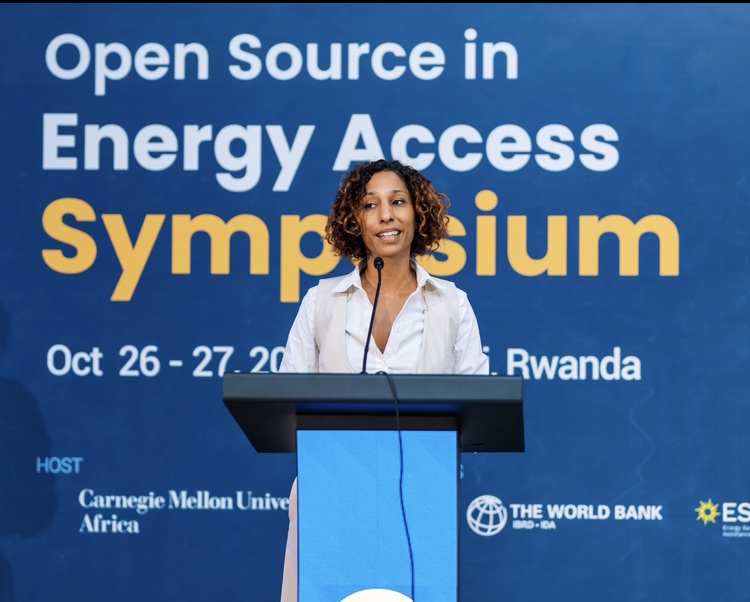
She added that proprietary technologies can be expensive and may restrict users’ ability to modify systems to suit their operational needs.
EnAccess, a Netherlands-based non-profit organisation, supports open innovation and collaboration in the energy access sector, including through funding and technical assistance for open-source tools.
Vivien Barnier, managing director of EnAccess, said open-source development could help ensure that energy providers and governments retain greater flexibility in how they use digital technologies.
“Open source lets the energy access sector stop reinventing the wheel. When tools like MicroPowerManager are built in the open, local operators and governments can adapt them to their own needs and keep the value close to home,” Barnier said.
“OSEAS is where that collaboration turns into real progress.”
The symposium provides a space for technology developers, institutions responsible for using their products and potential funders to identify shared priorities and explore opportunities for collaboration.
Mentis said participants were already discussing ways to integrate complementary tools, including linking energy-planning systems with monitoring platforms instead of developing overlapping functions independently.
Joint fundraising proposals were also being discussed, he said, allowing organisations to combine their expertise when approaching potential funders.
Digital tools for mini-grid operators
Another key development presented at the symposium was MicroPowerManager 1.0, an open-source platform designed to help operators of mini-grids and other decentralised electricity systems manage their customers and assets.
The new stable release combines customer and asset management functions with payment, messaging and localisation integrations, alongside a mobile application for field agents.
Donadello said some energy companies still rely on spreadsheets to track electricity meters, customers and operational activities, a process that can become increasingly difficult as their businesses grow.
MicroPowerManager provides a digital system through which operators can manage their activities and customer information.
The platform illustrates how shared digital tools could help energy providers improve their operations without each company having to develop its own software from scratch.
The broader objective is to make useful technologies accessible, adaptable and affordable for organisations working to expand electricity access.
Young innovators present energy solutions
The symposium also showcased six finalist teams from the OSEAS Open Source Hackathon, which began on September 28 and challenged participants to contribute to existing open-source energy access projects.
The finalists presented solutions addressing challenges ranging from remote monitoring of energy systems to identifying potential markets for solar products and improving the management of mini-grid customers.
Team Bravos won the award for Best Impact Potential for its WhatsApp channel plugin for MicroPowerManager.
Team Haske received the award for Best Technical Solution for its open remote monitoring gateway for Libre Solar battery management systems.
The other finalists were Peek Load, which developed a solution focused on spatial and temporal building energy demand; Pillar, which worked on identifying solar markets using sales data; Dynamis, which assessed and mapped productive uses of energy in agriculture; and ACID, which focused on managing OpenPAYGO-compliant devices through MicroPowerManager.
The projects demonstrated how software developers could contribute to addressing practical challenges faced by energy providers and users.
Mentis praised the quality of the work, noting that the young innovators had developed promising solutions within a relatively short period.
He said WRI was interested in speaking with participants about potential opportunities to contribute to Energy Access Explorer, particularly where additional software engineering capacity could help advance the initiative.
However, further involvement would depend on the needs of individual projects and the availability of support.
Donadello said 22 teams had participated in the hackathon, with six selected to present their solutions during the symposium.
She added that the open-source approach allows other developers to access the code, improve existing solutions and contribute to their development.
EnAccess maintains an online community for people working on open-source energy access technologies, where members can discuss projects and collaborate on software development.
For the organisers, the longer-term objective is to move promising innovations beyond prototypes and towards practical applications by governments, energy companies and other users.
Collaboration beyond Kigali
Organisers expect the symposium to generate further technical partnerships, shared knowledge products and joint fundraising initiatives.
Mentis said the discussions could lead to closer integration between existing technologies and help organisations identify opportunities to work together rather than independently developing similar solutions.
He also highlighted the importance of connecting technology developers with the institutions that need their tools and the funders who can support their development.
The approach reflects the broader challenges of expanding electricity access, which extends beyond power generation to include reliable energy for healthcare, education, agriculture, food storage and other economic activities.
For Rwanda, the launch of Energy Access Explorer provides an additional resource for identifying potential energy investment priorities and strengthening data-informed planning.
Its long-term effectiveness will depend on the reliability of the information it contains, the participation of local institutions and the extent to which planners and energy providers use it to inform real-world decisions.
The symposium’s wider message is that expanding energy access requires not only new technologies but also sustained collaboration to ensure existing solutions can be shared, adapted and put to practical use.


Related Articles
Three Miners Missing After Flooding at Kayonza Mine in Rwanda
Three miners were missing this Sunday after water flooded an underground mine...
Uwimanimpaye Cyiza Marie ClemenceOctober 11, 2026 
Permagardens offer a new start for drought-hit families in coastal Kenya
By Afia Agyapomaa Ofosu MBUGUNI, Kenya – For families in Mbuguni, a...
Uwimanimpaye Cyiza Marie ClemenceOctober 8, 2026 
Rwanda and Senegal deepen economic ties, with agriculture and standards in focus
KIGALI, Oct. 8, 2026 – Rwanda and Senegal have signed 11 agreements...
Uwimanimpaye Cyiza Marie ClemenceOctober 8, 2026 

Proposed Climate Insurance Could Cushion Rwanda’s Mine Workers Against Rainy-Season Income Losses
A proposed climate insurance scheme could help protect mine and quarry workers...
Uwimanimpaye Cyiza Marie ClemenceSeptember 30, 2026
Leave a comment