

Rwanda: The OND rainy season expected to help saving groups recover from prolonged dry spell
 Uwimanimpaye Cyiza Marie ClemenceNovember 10, 20264 Mins read
By Simon Kamuzinzi
While some Rwandans say saving money has helped them expand their businesses and livestock activities, many smallholder farmers have had a different experience this year. A prolonged dry spell has reduced agricultural production, leaving them with less money to put aside.
Farmers warn that savings groups, including one known as Turye Neza (Let’s Eat Well), through which members save money to share food during the end-of-year festivities, could struggle to meet their usual contributions ahead of Christmas and New Year celebrations.
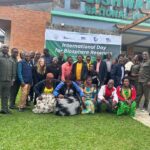
The concerns emerged during celebrations to mark International Savings Day, held in Kayonza District on November 5, 2026.
Participants involved in non-agricultural businesses expressed satisfaction with how their activities had expanded through regular savings, which enabled them to access bank loans and invest in their businesses.
Ruth Tuyiringire, a resident of Ruramira Sector in Kayonza District, said she and her colleagues initially had capital of Rwf5 million. By saving through financial institutions, they gradually built a financial record that enabled them to secure loans and expand their activities.
“We started by saving our initial capital of Rwf5 million in a bank. We then approached financial institutions and continued saving before applying for loans. The first time, we received Rwf8 million. As our business continued to grow, we applied for a second loan and were given Rwf16 million,” she said.
For farmers, however, the situation has been less encouraging
Deborah Nyirahabimana, a farmer from Gahini Sector in Kayonza District, said the prolonged dry spell, which lasted from May to October 2026, resulted in poor harvests and significantly reduced her ability to save.
“It has not been easy because the last dry season brought poor harvests, meaning we had very little to save. I used to put aside Rwf2,000 every week, but now I sometimes manage only Rwf500. There are even times when I cannot contribute anything and end up falling behind on my savings,” she said.
Muhimpundu Françoise, a farmer from Rurenge Sector in Ngoma District, said rainfall in mid-August 2026 initially gave farmers hope, prompting them to resume cultivation.
The rains also created temporary employment opportunities, allowing residents to earn money and contribute to a savings group known as Bwije Nkoze Iki (What Have I Done Today Before Sunset?). However, she said farmers were caught off guard when September passed almost entirely without rain, followed by much of October.
Rain eventually returned in the third week of October, allowing farmers to begin planting. However, it has remained inconsistent, with some areas experiencing dry spells lasting up to two weeks. In neighbouring Kabare and Kansana sectors, she said, there had been no rainfall at all.
How erratic rainfall affects rural savings groups
Rainfall patterns have a direct influence on the ability of rural communities to save, particularly in areas where households rely heavily on agriculture. In some communities, residents belong to several savings groups, each designed to meet a specific household need.
One of the main groups is organised around annual savings, which members share in December after harvesting crops from the short rainy season. The money helps families pay school fees for children preparing to begin a new academic year in January.
Another type of savings group distributes members’ contributions every June, following the harvest from the long rainy season. These funds are often used to pay for community-based health insurance, commonly known as Mutuelle de Santé.
There is also Turye Neza, a group through which members save money to finance food and other expenses during Christmas and New Year celebrations.
Another arrangement, known as Bwije Nkoze Iki, allows members to save small amounts from their daily earnings. Muhimpundu said this particular group had been among those hardest hit by the prolonged dry spell in 2026.
“Bwije Nkoze Iki is a savings group in which you contribute daily, depending on how much you earn. We share the savings every two months. Members cannot borrow from the group, and the group itself does not issue loans.
However, someone facing a particular emergency may be allowed to withdraw the amount they have already saved. This group, together with the one from which we expect to receive money for Christmas, has been affected by the recent dry spell. We will receive much smaller amounts than usual,” she said.
What can farmers do when rainfall forecasts fail to match reality?
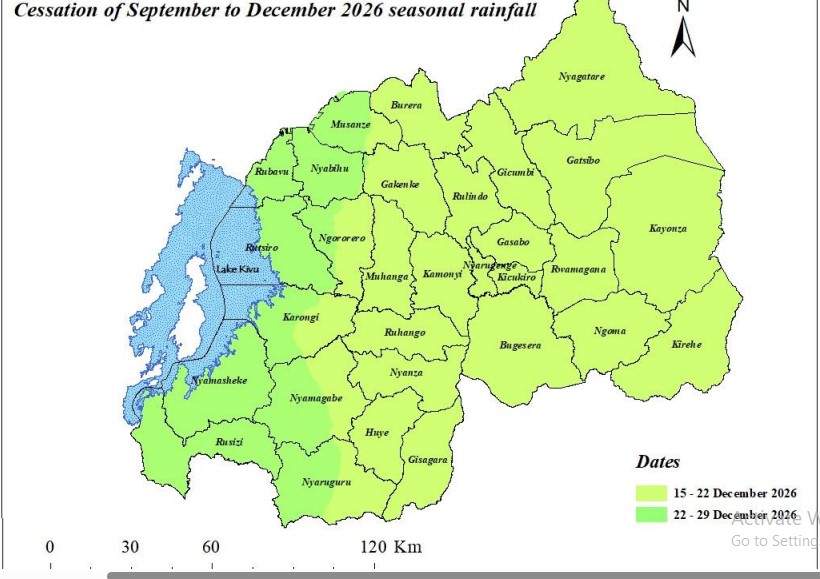
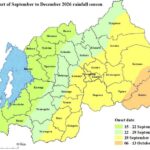
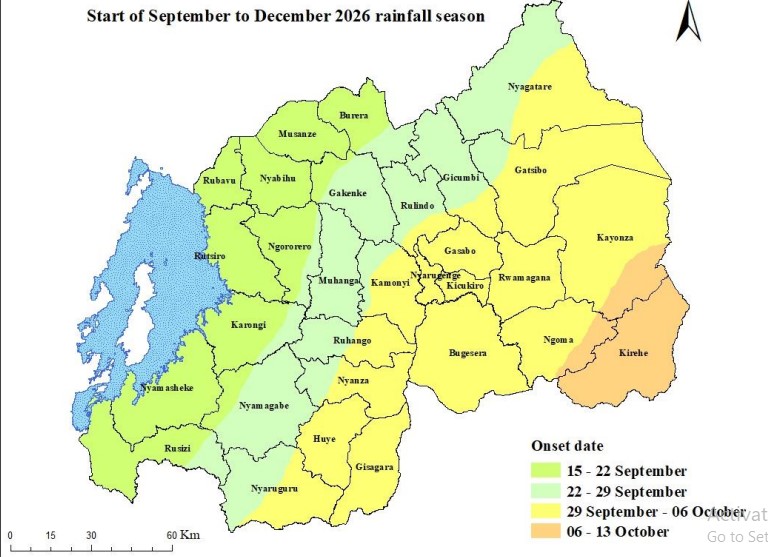
According to the 2026 short(SOND) rainy season forecast issued by Meteo Rwanda, the country was expected to receive between 300mm and 1,000mm of rainfall. This was above the Long Term Mean average for the season, which ranges from 279mm to 962mm.
The forecast indicated that the short rainy season would begin between September 15 and October 13, 2026, depending on the location, suggesting a delayed cessation in some areas.
The rains are expected to end between December 15 and 22 in most parts of the country, while many areas in the Western Province are expected to experience the end of the season between December 22 and 29.
With some areas still awaiting meaningful rainfall and only about five weeks remaining before the expected end of the season, concerns are growing, particularly in the Eastern Province.
The province’s Governor, Pudence Rubingisa, has urged farmers to consider growing drought-resilient crops to reduce the impact of climate change on agricultural production.
François Hakuzimana, one of the leaders of Imbaraga, a farmers’ organisation in Rwanda, said the organisation had opted to promote sweet potatoes as a crop that can withstand limited rainfall.
“Rain has not yet reached all districts, and we have experienced very severe dry conditions. We will wait for the full impact when savings groups distribute their money in December, but the prolonged sunshine has already reduced people’s ability to save. The timeline for planting other crops has now passed, but we will plant sweet potatoes because they are not restricted to a particular season. Anyone who has sweet potatoes at this time is in a good position,” he said.
Figures from the Ministry of Finance and Economic Planning (MINECOFIN) indicate that more than 15,000 savings groups have been registered across Rwanda, holding combined saving deposits of over Rwf54 billion.
Meanwhile, Umurenge SACCOs, which also have a large membership of farmers, have more than 4.4 million members and total savings deposits amounting to Rwf301 billion.
Rwanda has set a target of increasing the national savings rate to 25.9 per cent of Gross Domestic Product (GDP) by 2029, up from 12.4 per cent recorded in 2023.


Related Articles
The Fight Against Child Stunting Begins in the Family Permagarden
By Afia Agyapomaa Ofosu A child’s growth depends on more than age....
Uwimanimpaye Cyiza Marie ClemenceNovember 10, 2026 
Gishwati-Mukura: Communities find economic opportunities in protecting Rwanda’s biodiversity
RUTSIRO, Rwanda – For Hakizimana Théoneste, a beekeeper living near Gishwati-Mukura, protecting...
Uwimanimpaye Cyiza Marie ClemenceNovember 6, 2026 
Rwanda: Citizens urged to cultivate all idle land during rainy season
By Simon Kamuzinzi Rwanda’s Ministry of Agriculture and Animal Resources (MINAGRI) is...
Uwimanimpaye Cyiza Marie ClemenceNovember 3, 2026 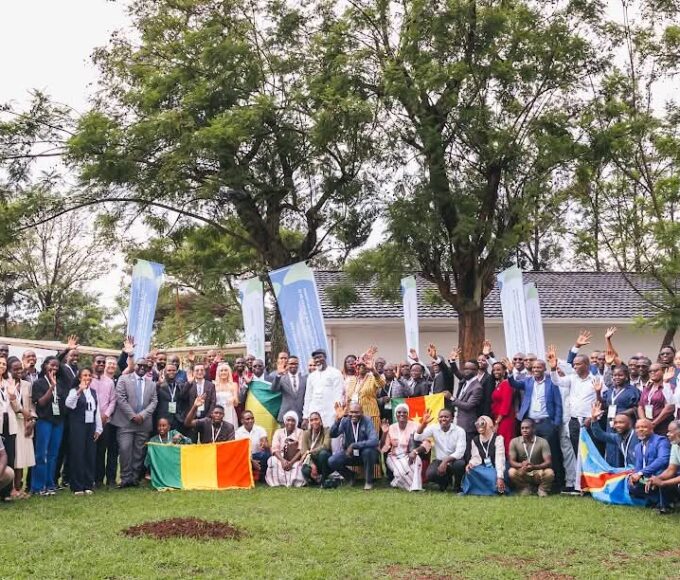

Africa’s cooling actors gather in Kigali ahead of Kigali Amendment’s 10th Anniversary
By Simon Kamuzinzi Africa’s actors in refrigeration are meeting in Kigali for...
Uwimanimpaye Cyiza Marie ClemenceOctober 30, 2026
Leave a comment