



Rwanda Strengthens Call to Protect Biodiversity While Boosting Agricultural Productivity
 Uwimanimpaye Cyiza Marie ClemenceMay 26, 20265 Mins read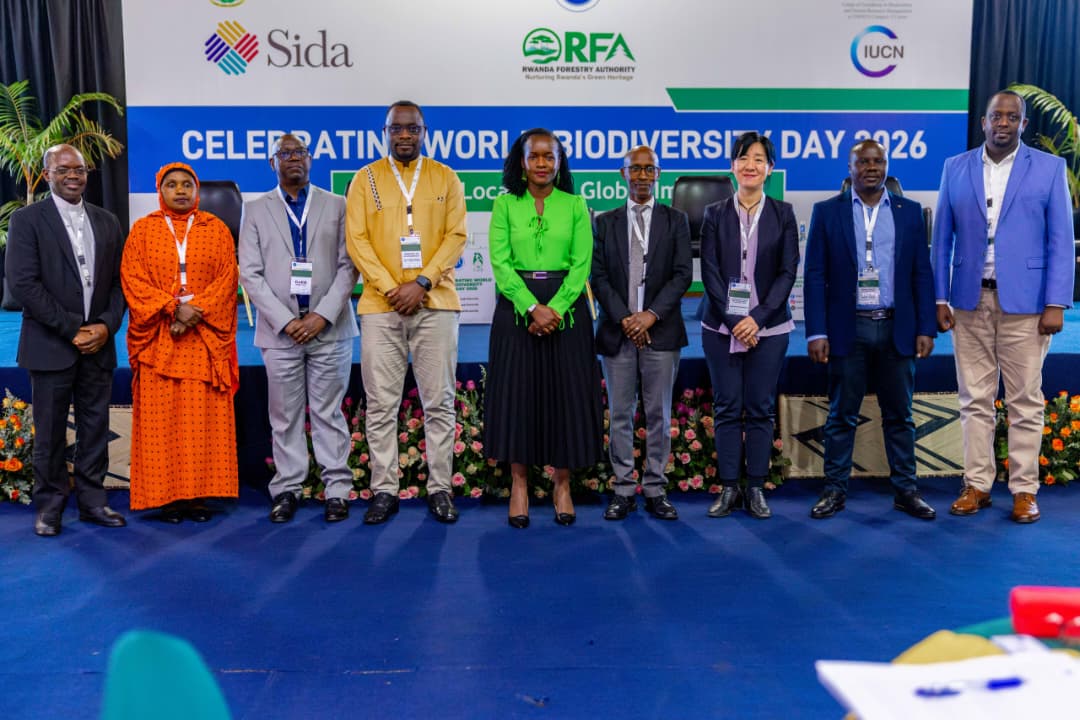
As Rwanda continues to expand its cities, agricultural activities, and infrastructure, experts are raising concerns about the growing pressure on biodiversity and ecosystems. Researchers, environmental leaders, forestry specialists, policymakers, international organizations, and farmers agree that balancing agricultural productivity with environmental protection is becoming increasingly urgent.
Speaking during the recent World Biodiversity Day celebrations in Rwanda, an event organized by the Ministry of Environment in collaboration with the Rwanda Forestry Authority (RFA), the International Union for Conservation of Nature (IUCN), and the University of Rwanda through the Center of Excellence in Biodiversity and Natural Resources Management (CoEB);
The Minister of Environment, Dr Bernadette Arakwiye emphasized that biodiversity remains central to Rwanda’s identity, economy, food systems, and climate resilience. Referring to this year’s theme, “Acting Locally for Global Impact,” the Minister noted that lasting solutions to biodiversity loss begin with local action supported by science, partnerships, and community engagement.
“This year’s theme, “Acting Locally for Global Impact,” resonates strongly with Rwanda’s vision and ongoing efforts in biodiversity conservation and sustainable natural resource management. It reminds us that while biodiversity loss is a global challenge of urgent concern, the most effective and lasting solutions are often driven by local action, informed by science, strengthened by partnerships, and grounded in the realities of communities.” She said.

“Biodiversity is not only the richness of species and ecosystems, but the foundation of the national prosperity including our economies, food systems, water security, and climate resilience. Yet, the world continues to face unprecedented biodiversity loss, calling for coordinated, transformative, and sustained action at all levels.” She added.
International Union for Conservation of Nature Rwanda Country Representative Kaori Yasuda emphasized the importance of Nature-based Solutions (NbS) in addressing biodiversity loss and climate challenges.
She noted that local actions such as ecosystem restoration, sustainable land use, wildlife conservation, and climate resilience initiatives can collectively contribute to global biodiversity goals while promoting healthier and more sustainable communities.
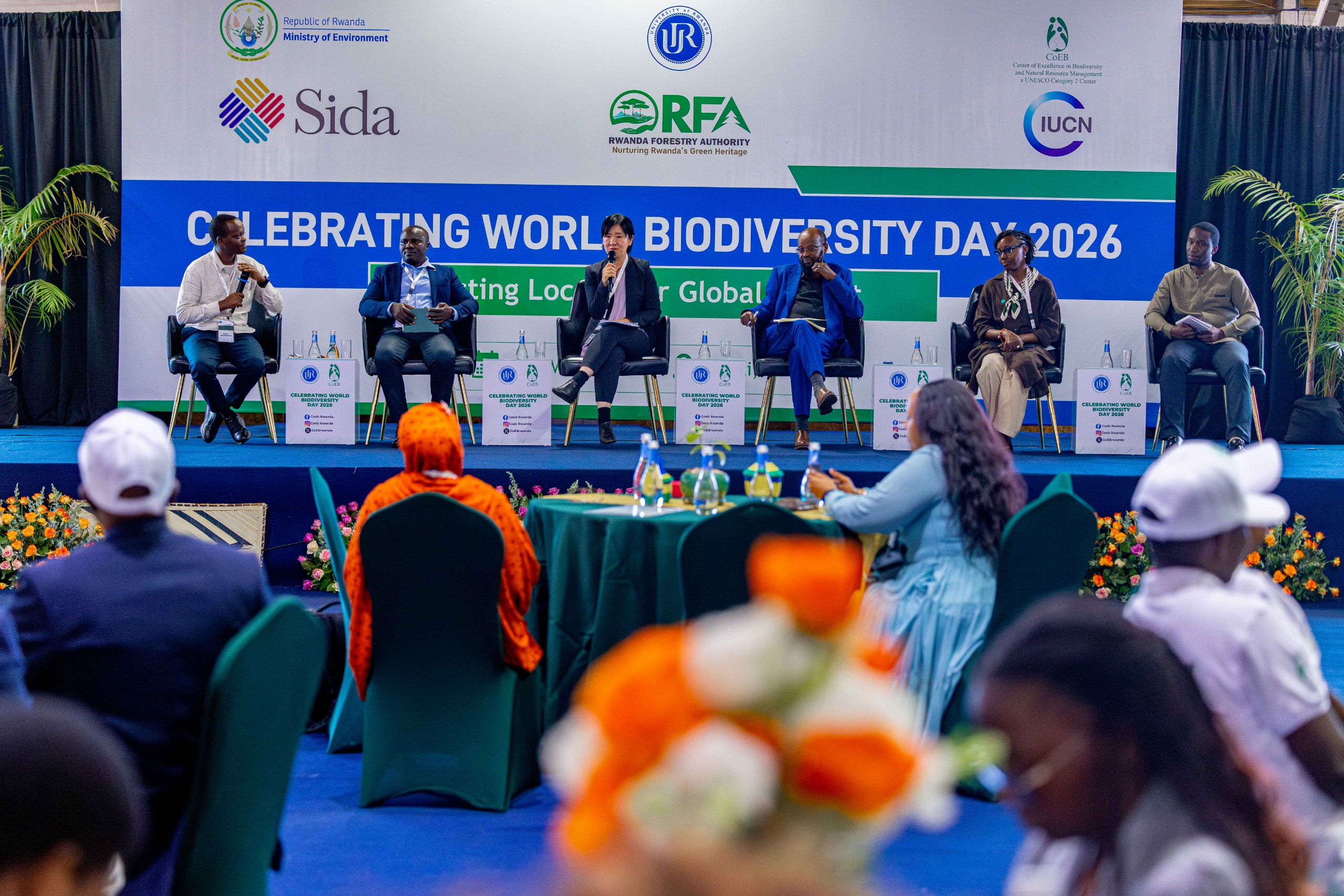
Yasuda also highlighted IUCN Rwanda’s ongoing partnership with the Ministry of Environment, the Rwanda Forestry Authority, and the Center of Excellence in Biodiversity and Natural Resource Management (CoEB) through the COMBIO project in Eastern Rwanda.
Supported by the Swedish International Development Cooperation Agency (Sida), the initiative focuses on strengthening community-based biodiversity conservation and promoting locally driven environmental protection strategies informed by research and local knowledge.
Rwanda has also committed to restoring two million hectares of degraded land by 2030 under the Bonn Challenge, alongside efforts to restore wetlands and strengthen eco-tourism initiatives.
Ir. Dominique Mvunabandi, Director of the Science, Technology and Innovation Unit at the Rwanda National Commission for UNESCO said communities must understand that protecting biodiversity starts with actions taken at the local level. He explained that UNESCO’s message encourages people to protect biodiversity within their own communities while contributing to broader global environmental goals.
Mvunabandi highlighted the importance of preserving indigenous trees and promoting agroforestry, where trees are integrated into farming systems to improve both environmental protection and agricultural productivity.
“We are encouraged to plant and protect indigenous trees, even within our homes and communities. Agroforestry-integrating trees with crops- deserves greater attention because it helps increase agricultural productivity while protecting the environment. When you act locally, you create global impact.”
He also stressed the need for stronger public awareness campaigns and more scientific research on biodiversity conservation.
According to Associate Professor Venuste Nsengimana, Director of the Center of Excellence in Biodiversity and Natural Resource Management (CoEB), many indigenous tree species are disappearing as their natural habitats continue to shrink due to urbanization, expanding agriculture, road construction, and other human activities.
He warned that biodiversity conservation goes far beyond protecting bees alone, noting that butterflies and many other small organisms also play a critical role in pollination and ecosystem balance. He explained that spraying pesticides in the evening does not necessarily protect pollinators, since many other beneficial organisms remain active at that time.
“We need thorough research to determine which organisms pollinate during the day, which ones are active in the evening, and the safest times for pesticide application without harming these organisms. Every living organism on Earth has a role to play.”
Associate Professor Nsengimana further emphasized that biodiversity includes organisms living in the soil that help improve soil aeration, water retention, and nutrient recycling, all of which are essential for healthy crop production.
Meanwhile, Dr. Concorde Nsengumuremyi, Director General of the Rwanda Forestry Authority, explained that forests play a major role in supporting beekeeping and protecting pollinators from harmful agricultural chemicals.
He noted that many beekeeping areas are intentionally located within forests, far from heavily cultivated agricultural zones where pesticides are commonly used. According to him, this distance helps protect bee populations because bees rarely travel beyond five kilometers while collecting nectar.
“Most of the places suitable for beekeeping are found in forests. That is why we support communities by providing training, equipment, and designated spaces for beehives.”
Dr. Nsengumuremyi added that Rwanda is also promoting non-timber forest products such as honey, medicinal plants, essential oils, perfumes, and eco-tourism activities to support livelihoods while encouraging forest conservation.
For Athanase Mukurarinda, Director of CIFOR-ICRAF Rwanda, the solution lies in investing more in natural pesticides made from plants and traditional herbs.
He acknowledged that pesticides remain important for food security because diseases can destroy crops like potatoes and push farmers into poverty. However, he argued that Rwanda should focus on developing plant-based alternatives that reduce harm to biodiversity while maintaining agricultural productivity.
“What we need is to improve pesticides by developing plant-based solutions that either do not harm biodiversity or have much lower impacts than chemical products. Biodiversity is essential because insects like bees improve pollination and increase crop yields.”
Mukurarinda also pointed out that healthy pollinator populations significantly improve coffee production and other agricultural outputs, while several European countries have already restricted some chemical pesticides because of their environmental impact.
At the community level, farmers are also beginning to embrace traditional and homemade organic pesticides.
Mpazihose Theoneste, a farmer from Ntarama trained in producing natural pesticides, said many farmers have observed the harmful effects chemical pesticides have on bees and other beneficial insects.
He explained that locally made organic pesticides are helping farmers fight crop diseases and harmful insects without damaging pollinators or the environment.
“I was trained to make traditional pesticides, and now I teach others how to do it as well. These remedies help fight crop diseases and harmful insects.”
The discussion around biodiversity conservation has also attracted the attention of disaster management authorities, who warn that environmental degradation increases communities’ vulnerability to climate-related disasters.
According to Christine Hitimana Niyotwambaza, DG Surveillance and Preparedness in the Ministry in Charge of Emergency Management (MINEMA); the loss of biodiversity especially forests and pollinators weakens ecosystems and reduces their ability to cope with climate change, increasing the risks of floods, landslides, droughts, and food shortages.
“Environmental conservation supports Rwanda’s disaster preparedness and climate resilience by protecting forests, wetlands, and wildlife that help control floods, reduce soil erosion, and maintain water and food security.”
As Rwanda pushes for increased agricultural productivity and economic growth, experts agree that preserving biodiversity must remain a national priority. Through scientific research, sustainable farming practices, forest conservation, disaster preparedness, and local innovation, the country can work toward a future where food security and environmental protection go hand in hand.



Related Articles
Permagardens offer a new start for drought-hit families in coastal Kenya
By Afia Agyapomaa Ofosu MBUGUNI, Kenya – For families in Mbuguni, a...
Uwimanimpaye Cyiza Marie ClemenceOctober 8, 2026 
Rwanda and Senegal deepen economic ties, with agriculture and standards in focus
KIGALI, Oct. 8, 2026 – Rwanda and Senegal have signed 11 agreements...
Uwimanimpaye Cyiza Marie ClemenceOctober 8, 2026 
ACE4Food: Helping Rwanda’s agri-food SMEs turn circular ideas into business opportunities
For Kayitesi Grace, circular economy is not a concept she only heard...
Uwimanimpaye Cyiza Marie ClemenceSeptember 25, 2026 

REMAPSEN: Building a bridge between health, environmental information and African communities
When a disease begins to spread, a water source becomes contaminated or...
Uwimanimpaye Cyiza Marie ClemenceSeptember 25, 2026
Leave a comment