


Rwanda: 71-year-old asthma patient turns to rainwater harvesting to cope with climate change
 Uwimanimpaye Cyiza Marie ClemenceNovember 20, 20265 Mins read
By Simon Kamuzinzi
At 71, Elina Niyonteze, a resident of Runda Sector in Kamonyi District, has found ways to cope with the growing effects of climate change, including unpredictable rainfall, household water shortages and the health challenges associated with asthma.
Her experience offers an example of how practical household solutions can help communities adapt to changing weather patterns, particularly in areas where access to reliable water supplies remains a challenge.
Gihara, a village in Runda Sector, is among the areas that the Water and Sanitation Corporation (WASAC) identifies as facing inadequate water supply. During the dry season, residents often have to descend into a valley to fetch water, a journey that can take up to two hours for someone walking quickly.
Residents say their main lifeline is a water source in Gatare. Without it, they believe daily life in the area would have become extremely difficult.
The spring serves hundreds of households living on a steep hillside overlooking the Nyabarongo River valley, on the outskirts of Kigali, approximately 10 kilometres from the Nzove Water Treatment Plant.
Long queues of residents carrying jerrycans are a common sight at the source. Many say they cannot depend entirely on WASAC because the utility’s supply is sometimes unavailable.
The Parliamentary Public Accounts Committee (PAC) has repeatedly highlighted persistent challenges in Rwanda’s water supply system, noting that several treatment plants have been operating below their installed capacity for more than five years.
Among them is the Nzove plant, which PAC says in quoting the Auditor General’s Report of the year 2024-2025, that supplies only 12 per cent of the 80,000 cubic metres of water it is expected to produce daily.
WASAC and the Ministry of Infrastructure (MININFRA) have attributed the supply constraints to several factors, including seasonal changes in water availability. During dry periods, the Nyabarongo River often experiences reduced flows, limiting the amount of water entering treatment facilities. During heavy rains, erosion flooding can also disrupt water transmission systems.
The country’s water infrastructure is another challenge. Storage reservoirs and distribution pipelines were designed to serve a much smaller population than the one currently living in Kigali and its surrounding areas.
MININFRA says many existing pipelines are too small to meet growing demand, particularly in neighbourhoods that have experienced rapid population growth without corresponding investment in basic infrastructure.
As a result, WASAC has introduced a water rationing programme in Kigali and surrounding areas. Residents of Runda, particularly those in Gihara, say they may receive piped water only once a month during the dry season and once a week during rainy periods.
A 27-cubic-metre tank that changed her life
Around 2013, long before water shortages became such a pressing concern, Elina Niyonteze and her husband decided to invest in a large rainwater harvesting tank at their home.
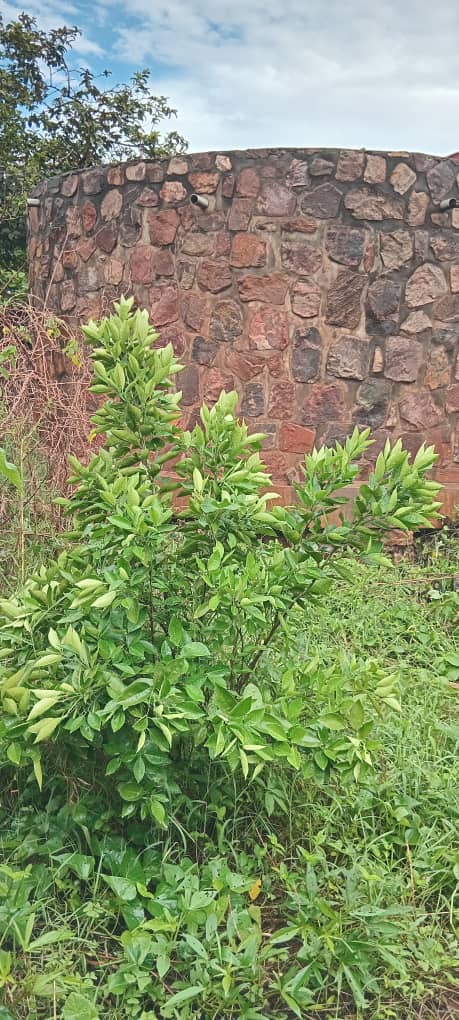
The tank has a capacity of 27 cubic metres and collects rainwater falling on their roof during the rainy seasons. The system ensures that very little of the rainwater runs off their property to cause soil erosion on neighbouring land.
At the time, Niyonteze kept cattle, maintained kitchen gardens that required regular watering and supported a household of approximately 20 people.
What might have seemed like an ordinary investment in water storage has since become one of the most important decisions she made for her household, particularly as she grows older and continues to live with asthma.
“Even when the rains stop in June, we can continue using the water until October because we store so much of it. I used to look after many children at home, sometimes as many as 20. We also had cows, although we eventually sold them. I would simply pick vegetables from my backyard, so I never had to buy vegetables,” she says.
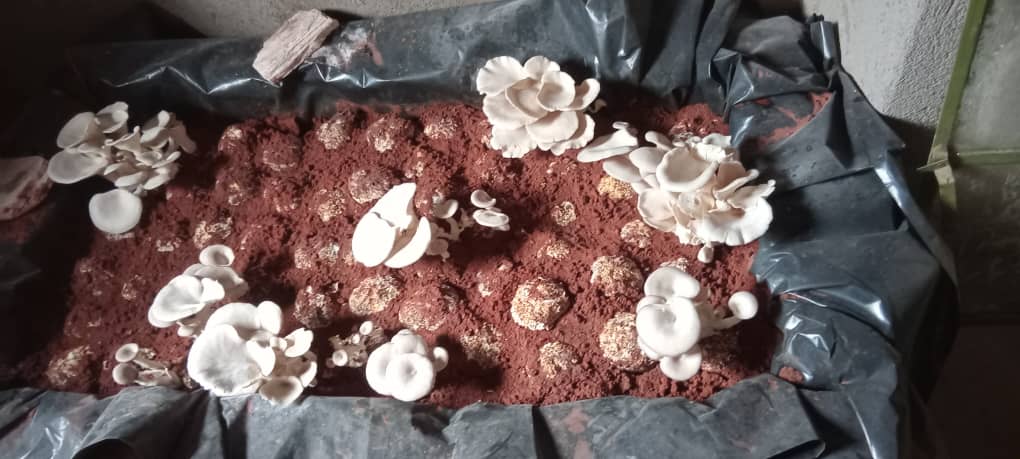
Despite her age, Niyonteze remains economically active. She now grows mushrooms at home, using water harvested in her tank to irrigate her mushroom gardens.
She invests more than Rwf350,000 in the mushroom-growing business and earns close to Rwf1 million from a production cycle that lasts approximately one month.
A former nursery and primary school teacher, Niyonteze says her mushroom business has earned her recognition among traders at Inkundamahoro Market in Kigali, where she has established a customer base since venturing into the business after leaving teaching.
To ensure that her household also has safe water for drinking and cooking, she purchased an additional plastic tank with a capacity of 5,000 litres. It stores water supplied by WASAC whenever it becomes available.
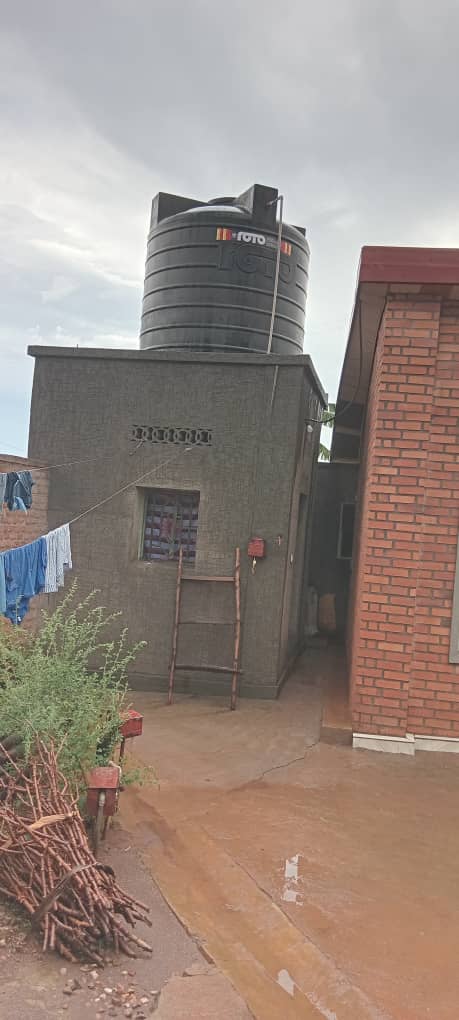
The arrangement has also enabled her to help neighbours who occasionally run out of water and struggle to meet their basic needs.
Niyonteze believes households across the country should invest in rainwater harvesting rather than allow large quantities of water falling on their rooftops to go to waste, especially when public water supplies are unreliable.
For residents of Gihara and other water-stressed communities, she considers household storage tanks one of the most practical solutions available in the short term.
She encourages people to collect rainwater, treat it with chlorine and make it suitable for drinking, provided it is handled and treated properly.
In her view, water tanks are becoming increasingly important both for improving household livelihoods and adapting to climate change. During rainy periods, they capture water that could otherwise contribute to soil erosion, while in dry seasons they provide a reserve for domestic and productive activities.
She also points to larger, relatively affordable underground water storage structures made using corrugated tent sheets, which households can install by excavating pits and lining them to hold rainwater.
For people who cannot afford to purchase storage facilities outright, she suggests exploring loans through Umurenge SACCOs to finance the investment.
Asthma adds another dimension to the climate challenge
For Niyonteze, adapting to climate change is not only about securing water. It is also about managing the health risks associated with changing weather conditions.
She says dust inside homes can be particularly dangerous for people living with asthma. Without sufficient water to sprinkle on dusty surfaces, indoor dust can aggravate their condition and trigger breathing difficulties.
Having experienced the loss of two family members to asthma, Niyonteze says she has learned to take precautions before changes in weather patterns trigger symptoms.
One of her strategies is to follow weather forecasts closely and prepare her medication ahead of the transition between dry and rainy seasons.
She says people living with asthma need reliable weather information to help them anticipate seasonal changes and manage their treatment accordingly.
However, she recommends Meteo Rwanda to provide more accurate forecasts, warning that unreliable predictions can lead patients to spend money on medication they may not immediately need.
“At one point, Meteo Rwanda’s forecast for the 2026 September-to-December rainy season indicated that rainfall would begin in September. I was not entirely convinced because I was not experiencing any symptoms in my body. But recently, as the rains approached in October, I began feeling the effects,” she says.
Niyonteze says she takes asthma medication when she anticipates a change in weather, which helps her remain free from serious breathing difficulties for up to three months.
This allows her to continue working and running her business without significant interruptions caused by her condition.
But not everyone living with asthma can afford the same level of protection.
Nyampundu Anisia, another asthma patient living in Gisozi, Gasabo District, says financial difficulties have forced her to remain indoors because she cannot afford medication that would cover her for three months.
She sometimes buys an inhaler to ease her breathing or visits a health facility, where she pays Rwf6,000 for oxygen treatment lasting approximately two hours.
Nyampundu is appealing to relevant authorities to pay greater attention to people living with asthma and consider reducing the cost of their medication, which she says is expensive.
According to the Ministry of Health’s 2024/2025 Annual Report, asthma ranked third among the most prevalent non-communicable diseases in Rwanda. Health facilities recorded 14,580 asthma patients in 2025.
The Ministry of Health is yet to respond by the time of publication, to questions about its plans to strengthen asthma prevention and treatment or support people living with the condition.

Related Articles
The Fight Against Child Stunting Begins in the Family Permagarden
By Afia Agyapomaa Ofosu A child’s growth depends on more than age....
Uwimanimpaye Cyiza Marie ClemenceNovember 10, 2026 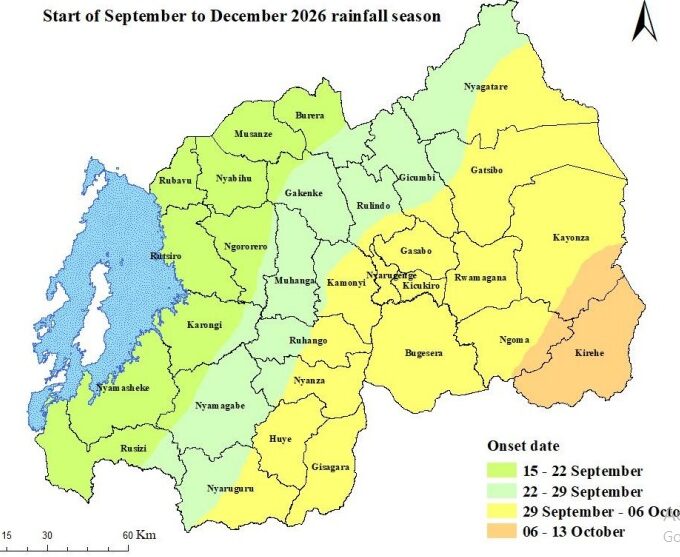
Rwanda: The OND rainy season expected to help saving groups recover from prolonged dry spell
By Simon Kamuzinzi While some Rwandans say saving money has helped them...
Uwimanimpaye Cyiza Marie ClemenceNovember 10, 2026 
Gishwati-Mukura: Communities find economic opportunities in protecting Rwanda’s biodiversity
RUTSIRO, Rwanda – For Hakizimana Théoneste, a beekeeper living near Gishwati-Mukura, protecting...
Uwimanimpaye Cyiza Marie ClemenceNovember 6, 2026 

Rwanda: Citizens urged to cultivate all idle land during rainy season
By Simon Kamuzinzi Rwanda’s Ministry of Agriculture and Animal Resources (MINAGRI) is...
Uwimanimpaye Cyiza Marie ClemenceNovember 3, 2026
Leave a comment