




GBOX Launches AI Literacy Initiative to Support Rwanda’s Digital and Sustainable Development
 Uwimanimpaye Cyiza Marie ClemenceFebruary 22, 20263 Mins read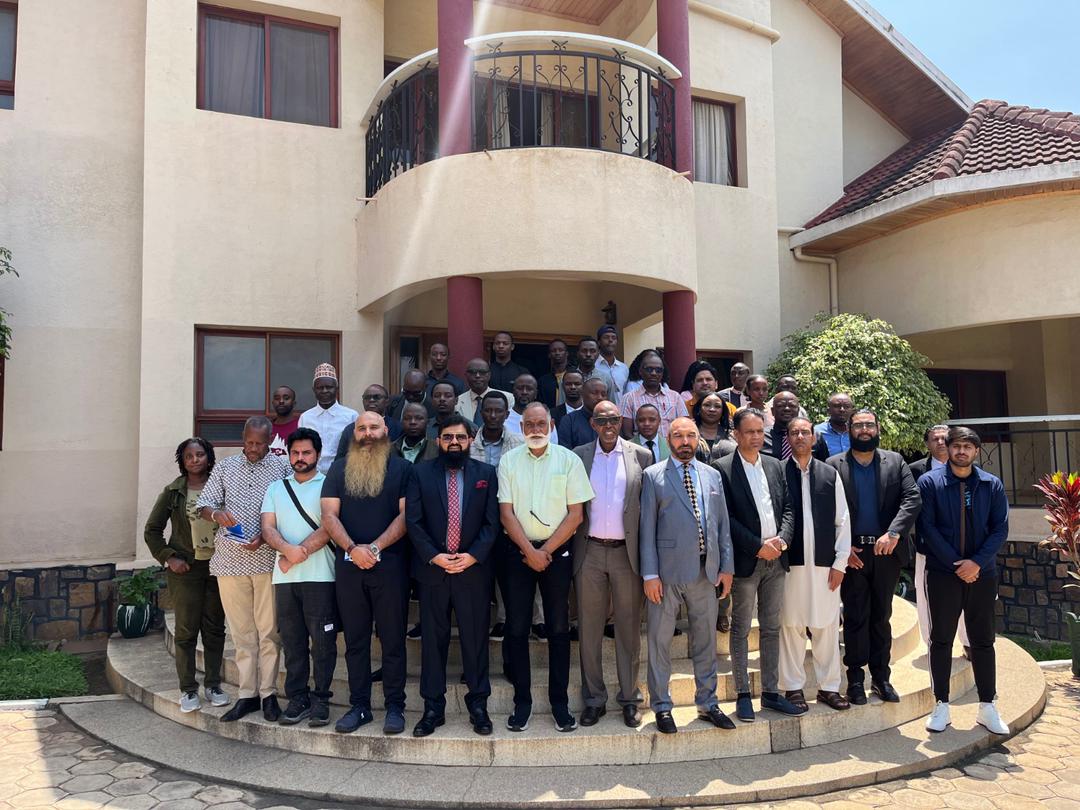
A new Artificial Intelligence (AI) literacy program has been introduced last week in Rwanda with the aim of expanding access to digital skills while contributing to broader sustainable development goals, including environmental resilience and innovation.
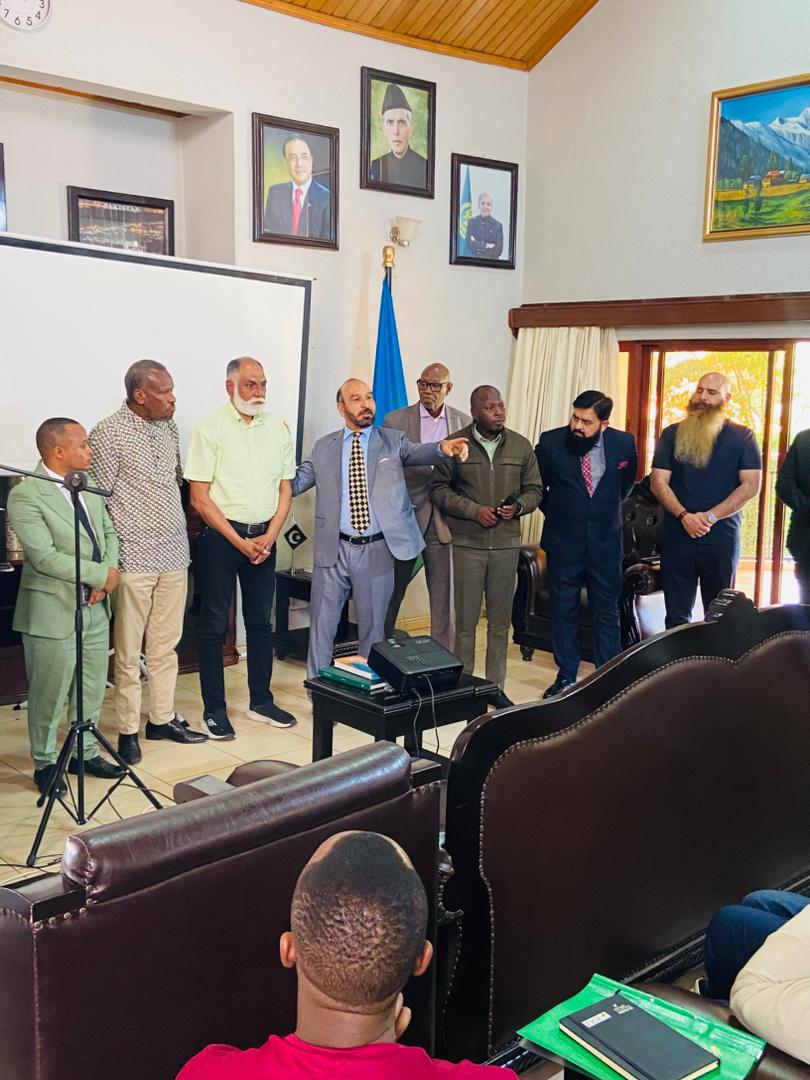
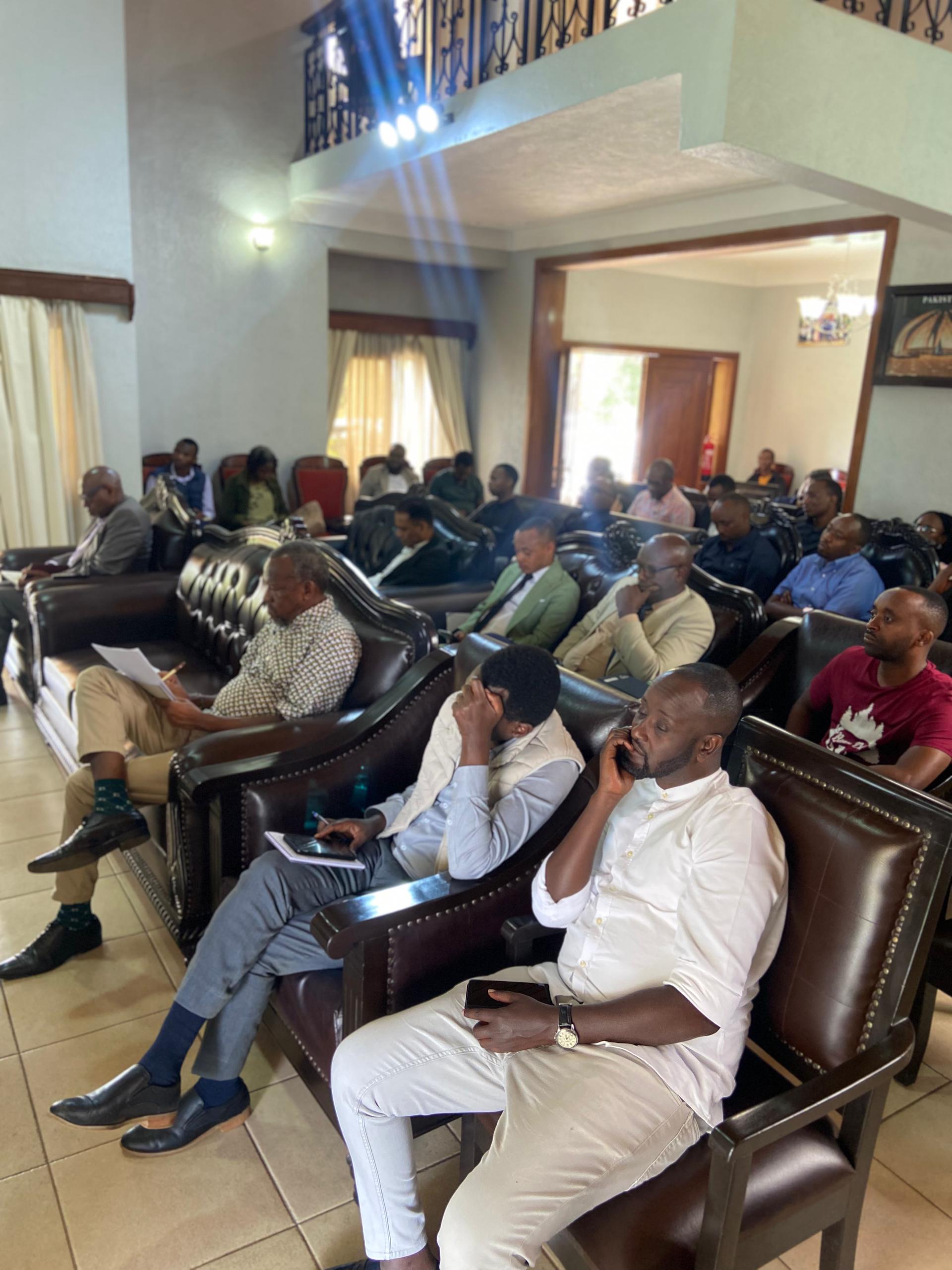
The initiative was presented by GBOX, a Pakistani education technology organization, at an event hosted by the Pakistan High Commission in Kigali. The launch brought together representatives from government, civil society, and the technology community.
Preparing for an AI-Driven Future
At the launch, Sannan Khan, CEO of GBOX, emphasized the growing role of AI in shaping societies and economies.
“We stand at a pivotal moment in human history. Artificial Intelligence is not coming; it is already here. For Rwanda, this matters profoundly. In alignment with Rwanda’s Vision 2050, our goal is to ensure that AI literacy is not a luxury for the few, but a national capability for all Rwandans.”
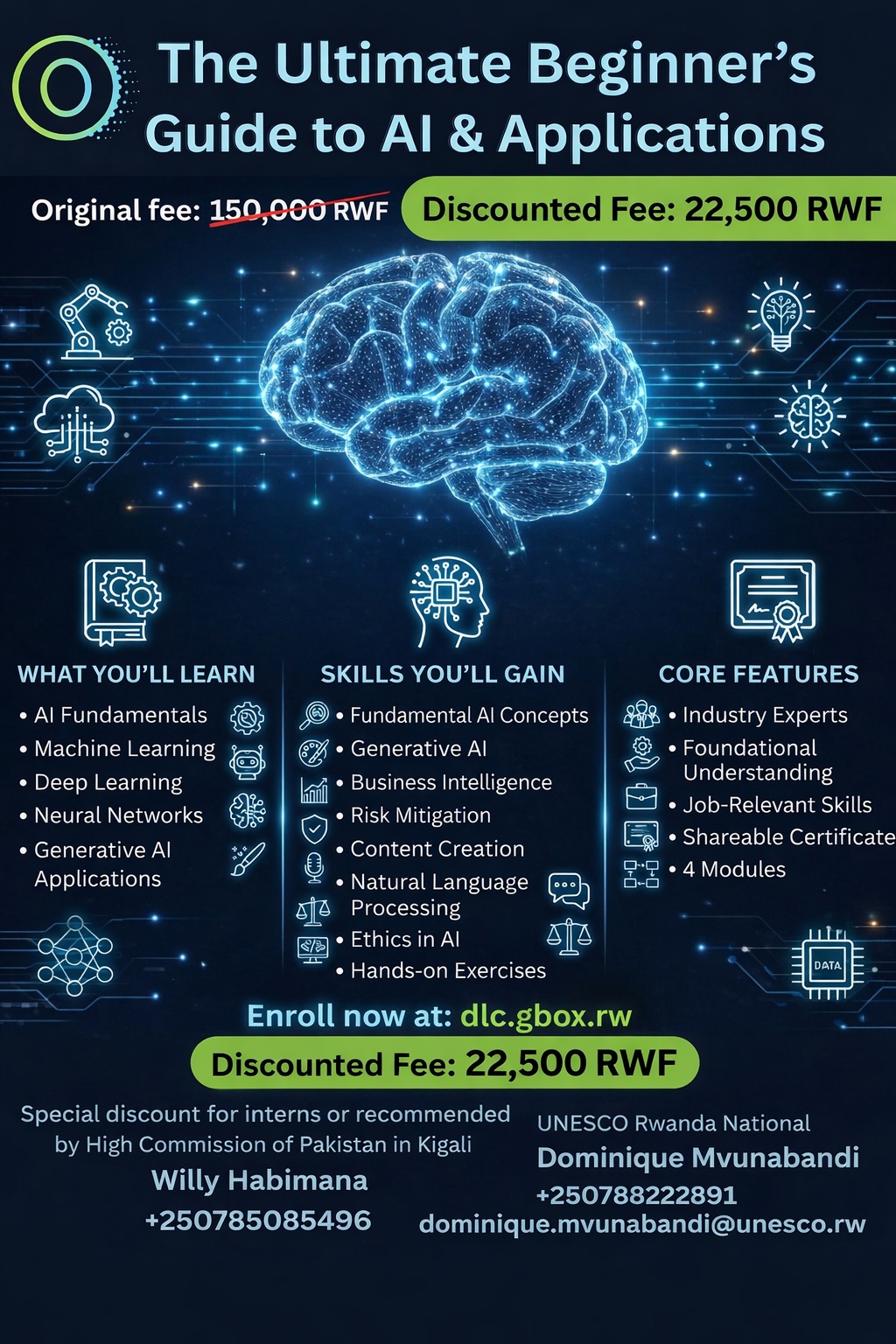
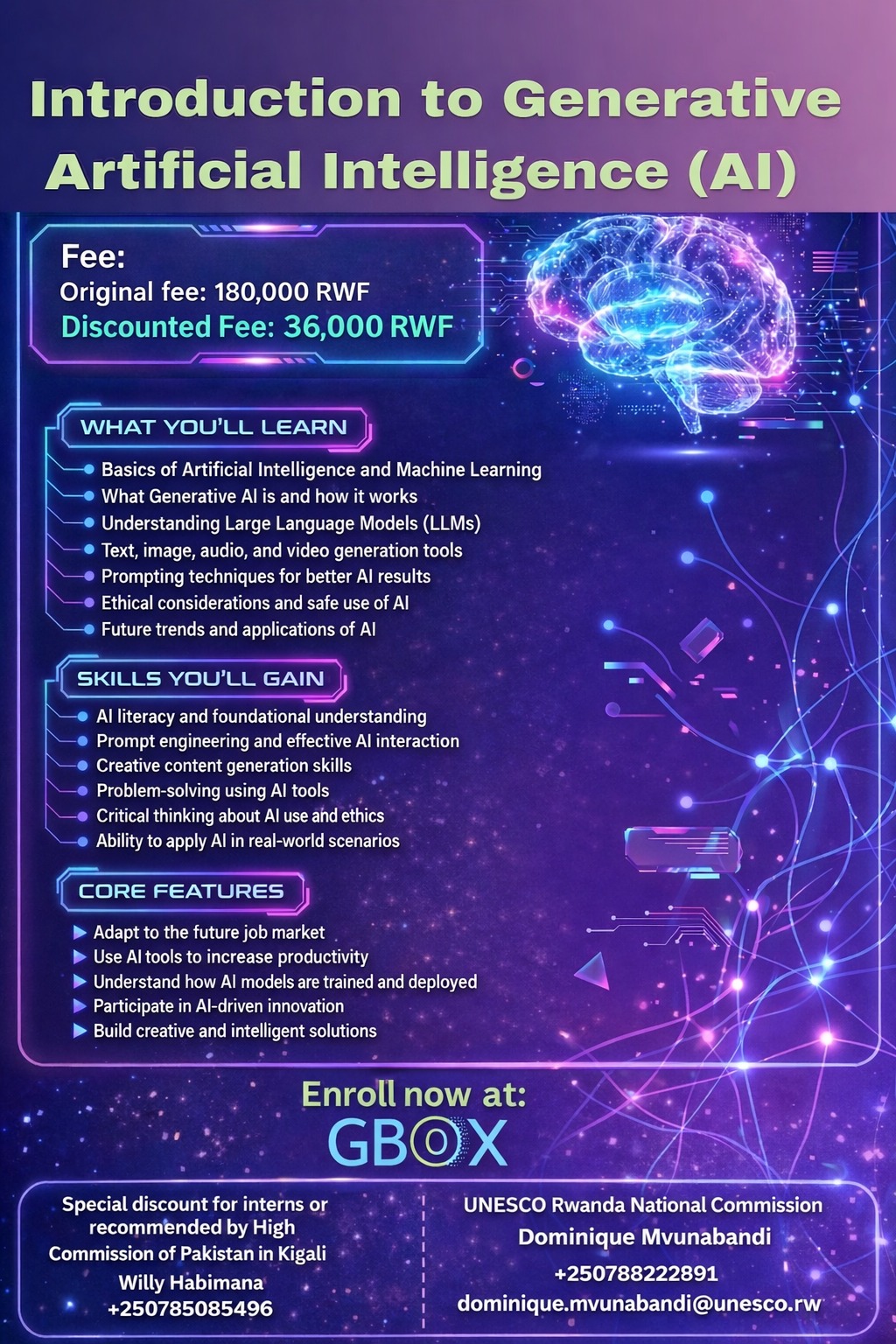
Two self-paced online courses were introduced: The Ultimate Beginner’s Guide to AI & Applications and Introduction to Generative Artificial Intelligence (AI). Both aim to give learners foundational knowledge of AI and its applications. Participants who complete the courses receive a certificate featuring the logos of the Pakistan High Commission in Kigali and UNESCO Rwanda.
Inclusive Education and Early Engagement
Representatives from the Rwanda National Commission for UNESCO highlighted ongoing efforts to encourage inclusion in emerging technologies.
Secretary General Albert Mutesa pointed to practical learning opportunities already underway.
“Creating this AI literacy starts with education,” Mutesa said. “We are already organizing AI robotic bootcamps in some schools, especially for young girls, so that they cannot be left behind with this coming technology innovation.”
These bootcamps which engage students in hands-on AI and robotics activities reflect a growing emphasis on preparing young people to participate in future economies and solutions that may include environmental applications, from data-informed climate strategies to digital tools for resource management.
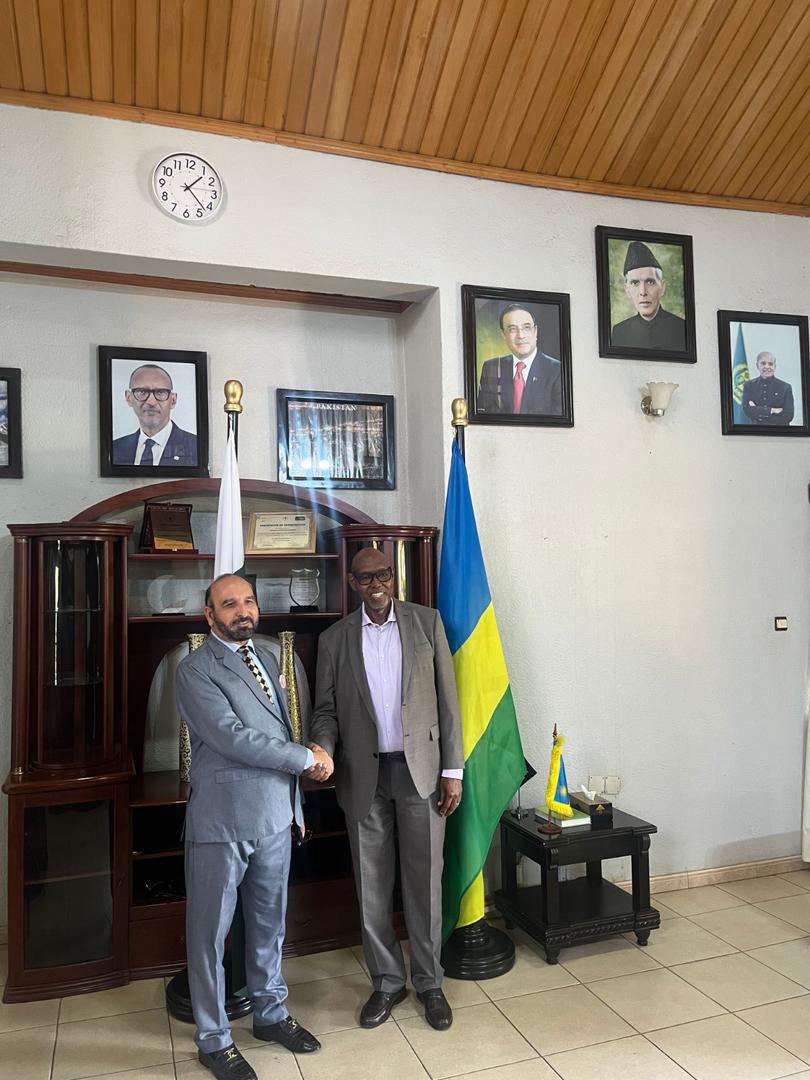
H.E. Naeem Khan, High Commissioner of Pakistan to Rwanda, described the event as a sign of strengthening cooperation in education and technology between the two countries.
“This venue represents more than just a location; it symbolizes the growing bridge of technological cooperation between our two nations,” he said.
Broad Impacts and Voices from the Field
Some training participants say the courses have already influenced their work.
Raymond Mwumvaneza, a Computer Science teacher at FAWE, said the program helped deepen his understanding of AI and offered new perspectives on enriching classroom learning.
Olivier Ngizwenimana from Kaze Hope Alliance Foundation (KHAF); a women-led social empowerment organization that supports education, skills development, and community resilience reported that AI tools introduced during the training have helped enhance planning, communication, and operational efficiency in his organization’s work.
KHAF’s programs include efforts to strengthen community capacities and economic resilience, including digital skills for women and youth, which can indirectly support broader sustainable development outcomes such as climate awareness and adaptive livelihoods.
AI Literacy and Sustainability
Experts note that wider AI literacy can support environmental problem-solving in Rwanda and beyond. For example, AI tools have the potential to enhance data analysis for climate monitoring, resource optimization, and predictive modeling that inform decision-making for environmental protection and disaster resilience.
AI applications in agriculture and natural resource management when taught with an emphasis on sustainability? can support community efforts toward climate-smart practices.
In addition to the courses, GBOX showcased its white-label Learning Management System (LMS), designed to help institutions digitize training and expand learning opportunities.
As Rwanda continues to invest in digital transformation and sustainable development, initiatives such as this reflect efforts to equip learners and professionals with skills that support both economic and environmental resilience.
Enrollment for the courses is available online, with multiple payment options including mobile money and card services.
For more info you can click here




Related Articles
ChangeNOW 2026 in Paris: Where Belief Turns into Action for a Sustainable Future
As the curtains fell on ChangeNOW 2026, the atmosphere was anything but...
Uwimanimpaye Cyiza Marie ClemenceApril 6, 2026 
ChangeNOW 2026 Opens in Paris with an Inspiring and Eye-Opening First Day
Under the spectacular glass dome of the Grand Palais, the first day...
Uwimanimpaye Cyiza Marie ClemenceMarch 31, 2026 
“Unsafe Meat Can Lead to Zoonotic Diseases,”- Dr. Gaspard Simbarikure
In Burera District, a visit to a modern poultry processing facility reveals...
Uwimanimpaye Cyiza Marie ClemenceMarch 24, 2026 

VIBE Campaign Launches to Boost Food Quality and Job Creation in Rwanda
The Government of Rwanda has officially launched a nationwide awareness campaign under...
Uwimanimpaye Cyiza Marie ClemenceMarch 23, 2026
Leave a comment