



Permagardens offer a new start for drought-hit families in coastal Kenya
 Uwimanimpaye Cyiza Marie ClemenceOctober 8, 20263 Mins read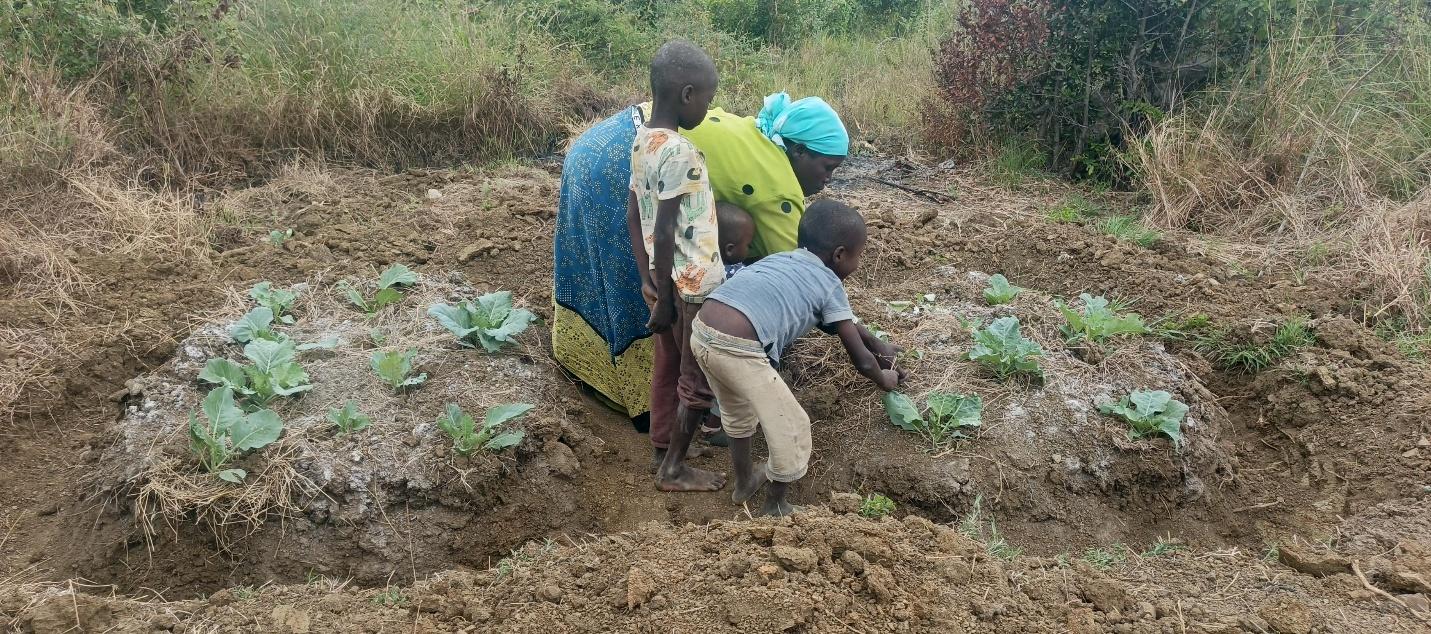
MBUGUNI, Kenya – For families in Mbuguni, a village in Kenya’s coastal Kwale County, the drought was not simply a bad season. It stretched across years, leaving fields barren, food stores empty and households struggling to find both food and water.
For about three and a half years, residents say, there was little or no rain.
Women travelled long distances in search of water and wild fruits, while some men left the area looking for work. The effects were also felt by children. Some stopped going to school, while others, including children as young as 10, turned to fishing in the ocean using mosquito nets.
Community members also reported cases of children suffering from malnutrition and stunting. Some were too weak to remain active during the day, while others were reported to have collapsed on their way to school.
The prolonged drought also affected something less visible but crucial to recovery: seeds. As crops failed repeatedly, families lost the seeds they would normally save for the next planting season.
It was against this backdrop that The Permagardens Foundation began working with families in Mbuguni in August 2024, training them to establish small vegetable gardens designed to make more efficient use of limited water.
Growing food with less water
The approach relies largely on locally available materials and careful water management, allowing families to grow vegetables even under difficult conditions.
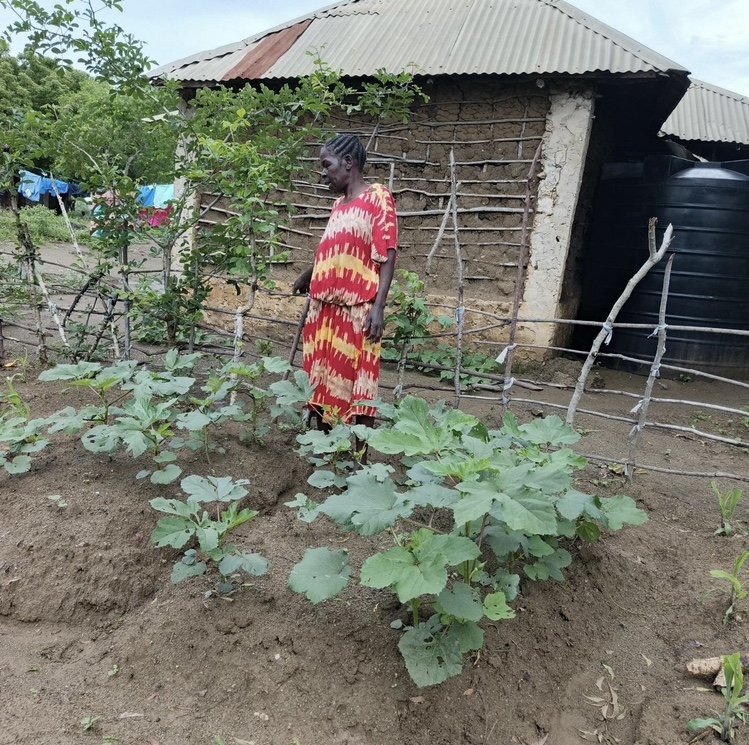
Isaac Atsiaya, a trainer with The Permagardens Foundation and lead at United for Poor Communities, said the aim was to help families begin producing food again after years of failed harvests.
For some women, the gardens have since become both a source of food and a modest source of income.
“Vegetable surplus was sold to cover school fees, medical expenses, and other small family needs,” Atsiaya said.
By November 2024, he said, the community had also recorded an increase in school attendance among children.
“No more cases of school children falling along the road were recorded,” he said.
For Mwanajuma Bakari, a widow raising nine children, having vegetables growing near her home has changed how she feeds her family and manages household expenses.
“I am grateful my family has plenty of vegetables, and I am selling the surplus to pay school fees,” she said. “Before permagarden, we used to sleep with empty stomachs.”
Binti Nasoro, a single mother of eight, said part of her harvest is helping her children return to school.
“My children had dropped out of school, and I am glad half of my permagarden harvest pays their school fees,” she said.
From empty fields to household food
The drought also put pressure on families whose livelihoods depended on increasingly unreliable food sources.
Mwanamisi Masudi, a mother of eight, said her household was left with very little after her husband left during the period of severe food shortages.
“Drought left us with nothing. My husband went away during the tough times with hunger,” she said. “I am happy now we can grow our own food. We don’t sleep hungry anymore.”
Other families say the benefits have extended beyond having vegetables on the table.
Niyawa Athumani, a mother of 10, said her children now have more food at home and that some who had stopped attending school have returned.
“My children have enough vegetables. In fact, they have gained weight, and those who had dropped out of school have returned,” she said. “We have a little money to support us from the surplus we sell.”
The gardens are mainly managed by women, who decide how the harvest is used, whether for household consumption or sale.
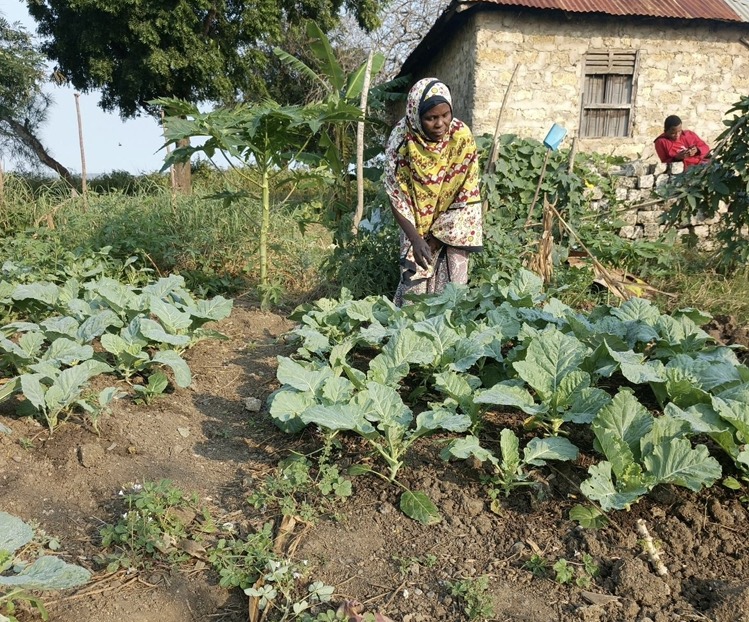
For a community that has experienced prolonged drought, that ability to produce even a portion of its own food is significant. It can reduce dependence on purchased vegetables while giving households another small source of income.
Preparing for an uncertain climate
The experience in Mbuguni also highlights the growing importance of water-efficient food production in areas exposed to climate extremes.
Droughts can leave households with little capacity to recover, particularly when repeated crop failures deplete food stocks, income and planting materials. At the same time, changing weather patterns can bring other risks, including heavy rainfall and flooding.
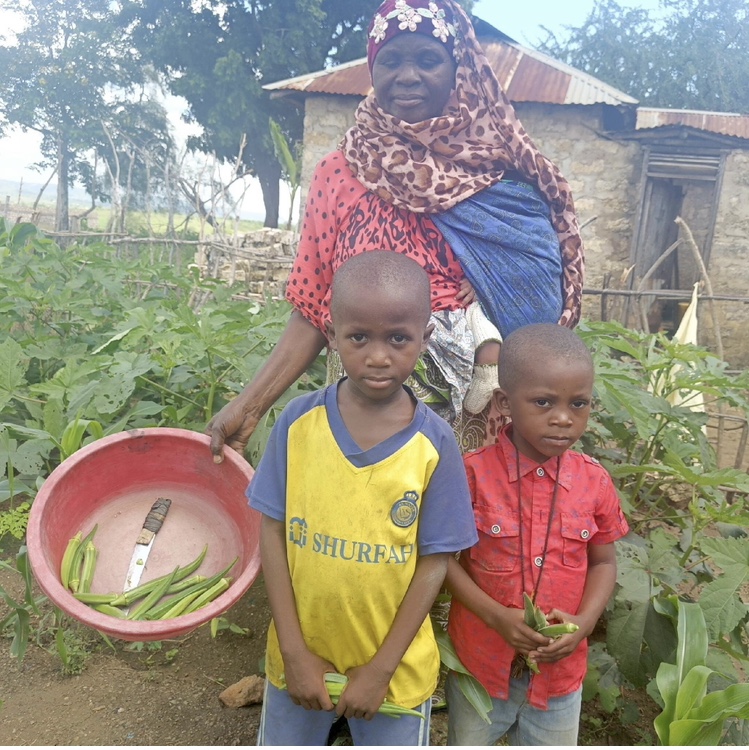
The permagardens do not remove those risks. But for the families cultivating them, the gardens offer a practical way to make use of small plots and limited water while rebuilding household food production.
After years of watching crops fail, families in Mbuguni are once again growing food close to home.
For some, the harvest is measured not only in vegetables, but also in school fees paid, children returning to class and fewer nights spent going to bed hungry.
The writer is a science journalist.
E-mail: prissyof@yahoo.com


Related Articles

Rwanda and Senegal deepen economic ties, with agriculture and standards in focus
KIGALI, Oct. 8, 2026 – Rwanda and Senegal have signed 11 agreements...
Uwimanimpaye Cyiza Marie ClemenceOctober 8, 2026 
ACE4Food: Helping Rwanda’s agri-food SMEs turn circular ideas into business opportunities
For Kayitesi Grace, circular economy is not a concept she only heard...
Uwimanimpaye Cyiza Marie ClemenceSeptember 25, 2026 
REMAPSEN: Building a bridge between health, environmental information and African communities
When a disease begins to spread, a water source becomes contaminated or...
Uwimanimpaye Cyiza Marie ClemenceSeptember 25, 2026 

New biodiversity outlook seeks to turn regional knowledge into conservation action
NAIROBI, Kenya, Sept. 22, 2026 -A new regional biodiversity publication covering 24...
Uwimanimpaye Cyiza Marie ClemenceSeptember 23, 2026
Leave a comment