




At ChangeNOW 2026: How BetterSoil’s farming technology could reduce reliance on energy-intensive fertilizers
 Uwimanimpaye Cyiza Marie ClemenceMay 15, 20263 Mins read
PARIS – At ChangeNOW 2026, conversations around climate innovation extended beyond renewable energy and carbon markets to a less obvious part of the energy equation: agriculture.
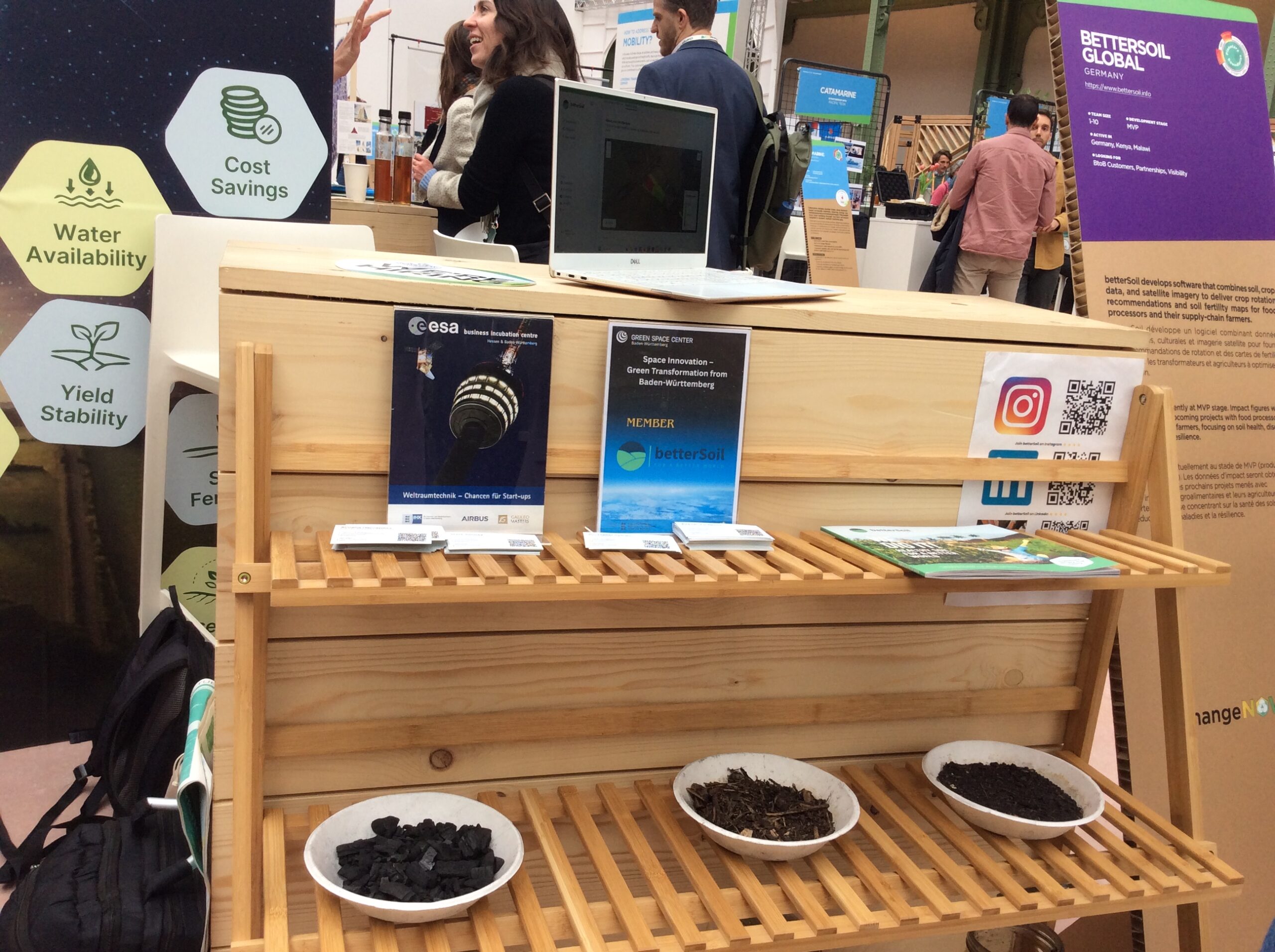
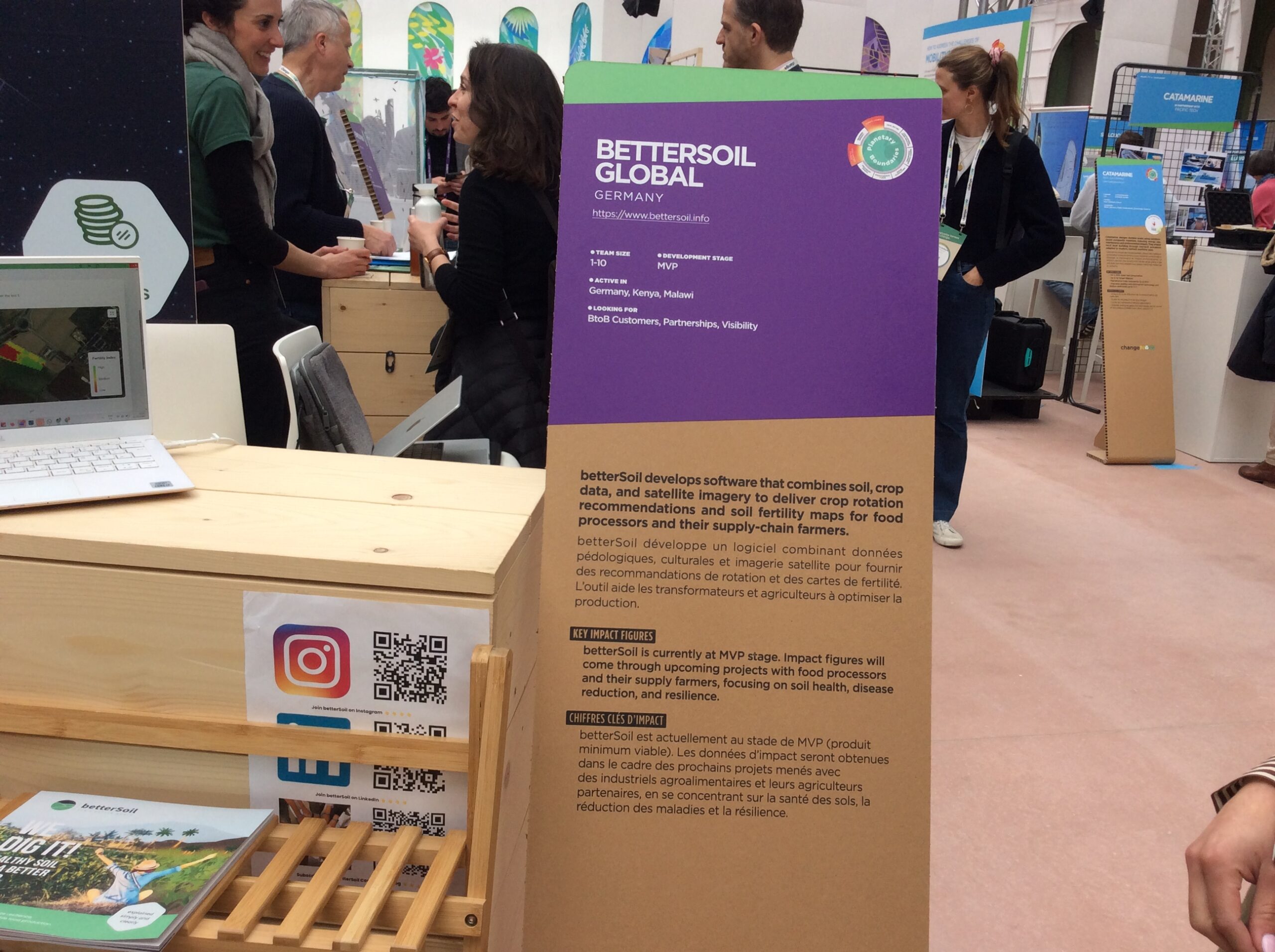
Among the exhibitors focusing on agriculture and land restoration was BetterSoil Global, a company using satellite data and crop analysis to help farmers rebuild soil health through tailored crop rotation, an approach that could also reduce farmers’ reliance on energy-intensive fertilizers.
In an interview with Earth Rwanda during ChangeNOW 2026, Mark Solway, Head of Product Management and Development at BetterSoil Global, explained how the company is developing a platform designed to make regenerative farming practices more accessible and data-driven.
“We’re trying to democratize the selection of crops and make it specific to the field in question,” Solway said.

Mark Solway, Head of Product Management and Development at BetterSoil Global
The company’s approach combines several layers of agricultural data. Satellite imagery is used to monitor soil fertility and crop performance over a five-year period, while climate information helps assess seasonal conditions and temperatures in specific locations. The system also integrates soil sample databases and information provided directly by farmers, including previous crops, field location and future planting plans.
Using that data, BetterSoil generates customized crop rotation recommendations aimed at restoring nutrients naturally depleted by intensive farming.
One of the startup’s primary concerns is nitrogen loss, a growing issue in heavily cultivated farmland. According to Solway, many farmers in Northern Europe leave fields bare during winter months, exposing soil to erosion caused by rain and wind. Over time, this reduces nitrogen, carbon and other essential minerals.
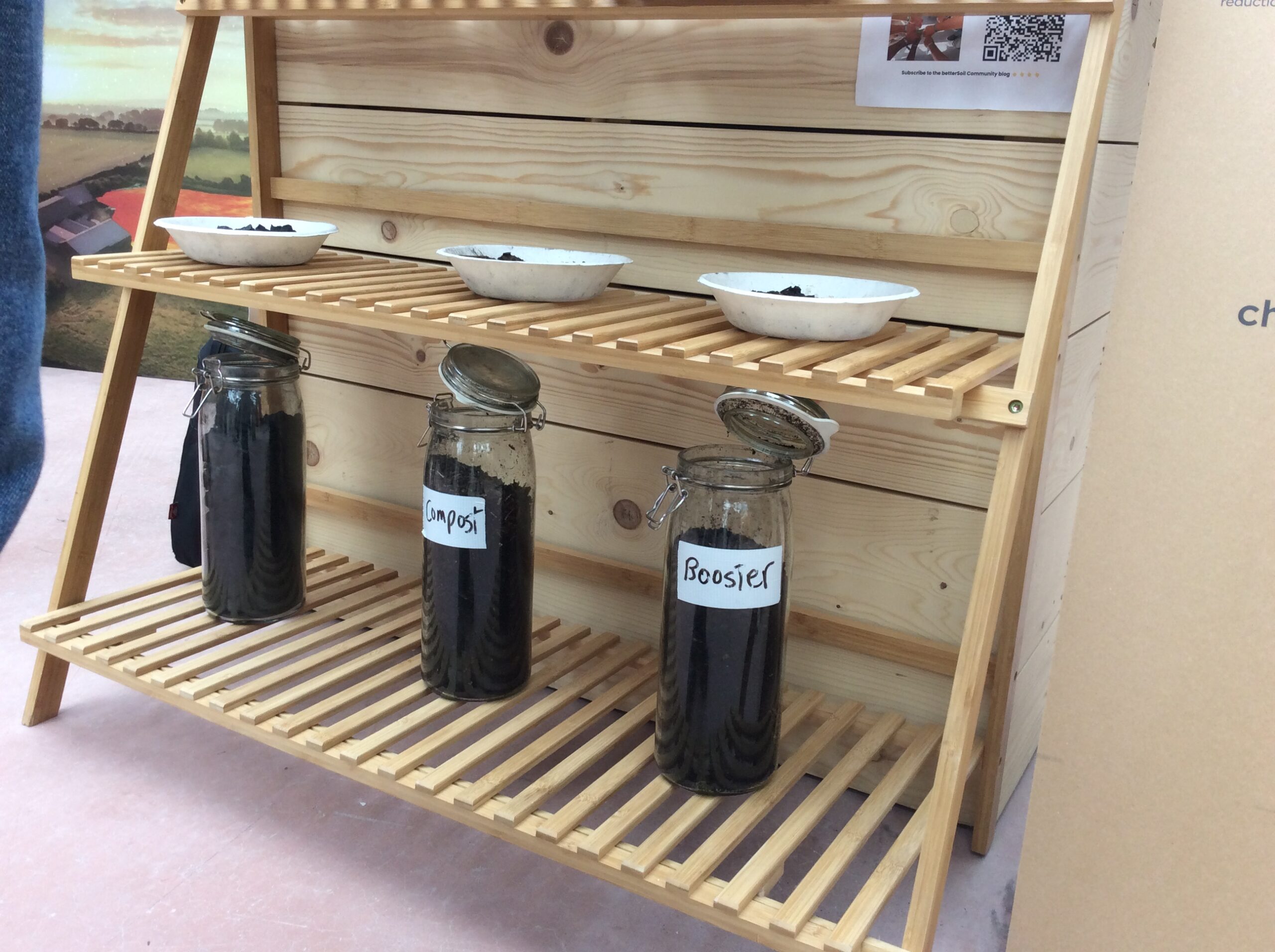
BetterSoil’s proposed solution centres on cover crops and regenerative planting cycles. Certain crops, particularly legumes and beans, naturally restore nitrogen levels by fixing it into the soil through their root systems.
“The intention is that there will be more nitrogen in the soil at the end of the crop rotation than there was at the beginning,” Solway said. “Effectively, it requires less use of chemicals or fertilizer to achieve that goal.”
That potential reduction in fertilizer use has an energy dimension. The production of synthetic nitrogen fertilizers is energy-intensive, largely because ammonia, the basis for most nitrogen fertilizers, is produced through the Haber-Bosch process. Modern ammonia production relies heavily on fossil fuels, particularly natural gas, to provide the hydrogen and energy required for the process. 
Research by scientist Vaclav Smil has documented the central role of the Haber-Bosch process in modern food production and the significant energy requirements associated with industrial nitrogen fixation. His work also highlights how the widespread use of synthetic nitrogen fertilisers transformed global agriculture. 
More recent research has likewise described conventional ammonia production as energy- and carbon-intensive, with studies estimating substantial energy requirements for producing ammonia from fossil-based feedstocks. 
Reducing the amount of synthetic fertilizer needed on farms could therefore have implications beyond soil health, potentially lowering energy demand associated with fertilizer production further up the agricultural supply chain.
The company has so far concentrated its efforts on Germany’s potato sector, where declining soil quality has become an increasing concern despite improvements in fertilizers and agricultural productivity.

“The amount of potatoes being generated in Northern Europe in the last 20 years has been going down every year because the soil quality is getting worse,” Solway said. “Despite the fact that the crops have improved, despite the fact that the fertilizers have improved, in reality there’s nothing left in the soil.”
The challenge highlights a tension within modern agriculture: improving yields has often depended on increasingly sophisticated inputs, while the underlying condition of the soil can continue to deteriorate.
BetterSoil’s approach seeks to address that problem by using data to determine which crops can help restore nutrients while maintaining agricultural production. If successful, the model could potentially reduce dependence on external inputs, including fertilizers, while improving the longer-term productivity of farmland.
While the project is currently focused on Europe, BetterSoil Global says its technology was designed for broader global use. The startup sees potential applications across Africa and Asia, including for crops such as rice and plantain.
“We’ve designed the entire system so it can be used anywhere,” Solway said.
For countries seeking to improve food production while managing energy, climate and environmental pressures, such approaches could offer another way of thinking about the relationship between agriculture and energy not only through the electricity or fuel used on farms, but also through the energy embedded in the inputs farmers depend on.
As climate change and soil degradation continue to challenge global food systems, regenerative agriculture has become an increasingly important topic among climate innovators and policymakers alike.
At ChangeNOW 2026, BetterSoil Global reflected a wider trend among climate-focused startups: using technology not only to improve agricultural efficiency, but also to restore the long-term resilience of farmland and potentially reduce dependence on energy-intensive agricultural inputs.




Related Articles
Three Miners Missing After Flooding at Kayonza Mine in Rwanda
Three miners were missing this Sunday after water flooded an underground mine...
Uwimanimpaye Cyiza Marie ClemenceOctober 11, 2026 
Permagardens offer a new start for drought-hit families in coastal Kenya
By Afia Agyapomaa Ofosu MBUGUNI, Kenya – For families in Mbuguni, a...
Uwimanimpaye Cyiza Marie ClemenceOctober 8, 2026 
Rwanda and Senegal deepen economic ties, with agriculture and standards in focus
KIGALI, Oct. 8, 2026 – Rwanda and Senegal have signed 11 agreements...
Uwimanimpaye Cyiza Marie ClemenceOctober 8, 2026 

Proposed Climate Insurance Could Cushion Rwanda’s Mine Workers Against Rainy-Season Income Losses
A proposed climate insurance scheme could help protect mine and quarry workers...
Uwimanimpaye Cyiza Marie ClemenceSeptember 30, 2026
Leave a comment