




Rwanda puts carbon markets at centre of climate finance push ahead of CMAS 2026
 Uwimanimpaye Cyiza Marie ClemenceSeptember 21, 20263 Mins read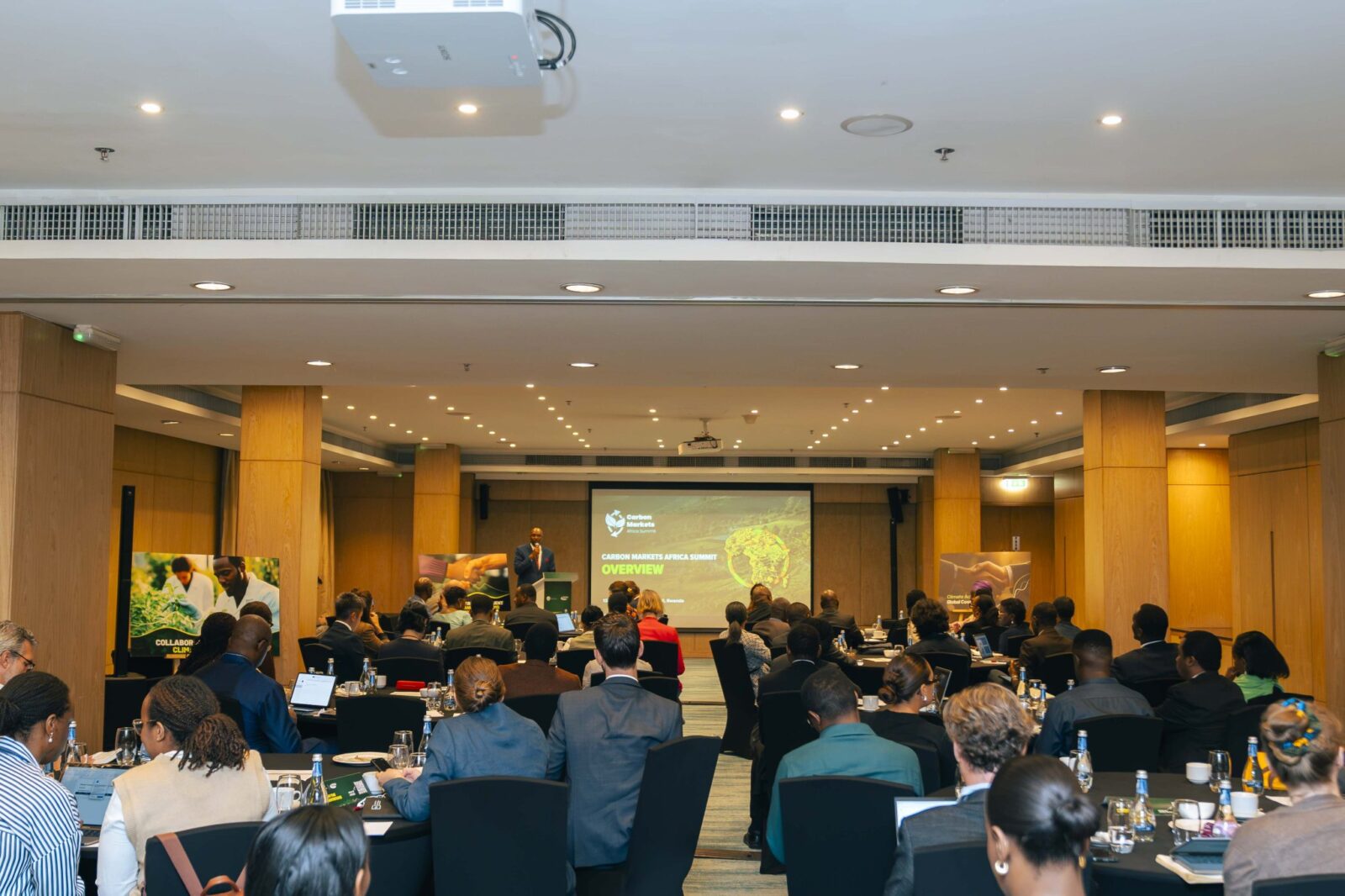
Rwanda is preparing to put carbon markets at the centre of its climate-finance agenda when it hosts the Carbon Markets Africa Summit (CMAS 2026) next month, as the country seeks to attract investment and financing for projects aimed at cutting greenhouse-gas emissions.
The summit, scheduled for Oct. 13-16 in Kigali, is expected to bring together government representatives, investors, project developers, technical experts and other stakeholders to discuss the development of Africa’s carbon markets.
For Rwanda, the meeting comes as the government seeks to turn climate and environmental strategies into projects that can attract capital.
“But strategies alone are not enough. We are increasingly focused on putting in place the foundations that allow us to implement them,” Environment Minister Dr Bernadette Arakwiye told development partners, members of the diplomatic corps and journalists during a briefing in Kigali on Sept. 16.
According to information presented by the Ministry of Environment and the Rwanda Environment Management Authority (REMA), Rwanda has 29 projects aimed at reducing greenhouse-gas emissions, which have generated about $1.5 million.
The government sees carbon markets as one mechanism through which such projects can generate additional financing.
Turning emissions reductions into credits
Carbon credits represent quantified reductions or removals of greenhouse gases, calculated using scientific methodologies and subject to applicable standards and verification requirements.
Arakwiye said the process allows environmental activities to be assigned an economic value.
“There are methods used to scientifically calculate how much greenhouse gas has been reduced or prevented from being emitted, and from that you know the amount of carbon credits you have. That amount is what is traded on the market,” she said.
Projects involving forests and tree planting are among the activities that can contribute to emissions reductions or removals.
For Rwanda, the development of a functioning carbon market is therefore linked not only to climate policy but also to the search for investment.
The country is developing infrastructure to support carbon-market activities, including a National Carbon Registry, while also pursuing cooperation under Article 6 of the Paris Agreement, which provides frameworks for countries to cooperate in meeting their climate targets.
These systems are intended to provide greater structure around carbon-market activities as the country seeks to increase participation and attract investment.
Financing a growing climate challenge
The push for carbon-market financing comes against a substantial funding requirement.
Information presented at the briefing indicated that Rwanda needs about $12 billion to finance environmental protection and climate-resilience measures, of which about $5 billion has already been mobilised.
The financing gap reflects the scale of the country’s climate and environmental needs, including measures to strengthen resilience to floods, landslides and other climate-related events.
Carbon markets are not expected to meet that requirement on their own. Rather, they are one potential source of finance alongside public resources, development assistance, private investment and other forms of climate finance.
That distinction will be important as countries seek to expand carbon markets while maintaining confidence in the environmental integrity of the credits being traded.
CMAS 2026 is expected to provide a platform for discussions on how African countries can develop their carbon markets and attract investment while strengthening the systems needed to support them.
The programme includes a Ministerial and Technical Leadership Roundtable, bringing political and technical perspectives together around the continent’s carbon-market agenda.
Linking markets with climate action
Rwanda’s preparations for CMAS come alongside preparations for several other international environmental meetings, including the 17th Conference of the Parties to the Convention on Biological Diversity (CBD COP17), the 38th Meeting of the Parties to the Montreal Protocol (MOP38) and the U.N. climate conference COP31.
The government says it intends to use those engagements to highlight initiatives in areas including forest restoration, biodiversity conservation, wetland protection, erosion control and clean energy.
But financing remains a central issue.
For Rwanda, the value of international environmental meetings lies not only in negotiating commitments but also in building partnerships that can help implement them.
Arakwiye said Rwanda wanted the meetings it hosts and attends to create space for countries to exchange experiences and agree on practical measures for the years ahead.
“It’s an opportunity to exchange on the achievements and to agree on measures to take to pursue our journey for the years to come,” she said.
The country’s carbon-market push will therefore be tested not only by the volume of credits generated or traded, but by whether the emerging market infrastructure can help channel credible climate finance towards projects that deliver measurable environmental benefits.
As CMAS 2026 approaches, Kigali is preparing to host a conversation that increasingly sits at the intersection of climate policy, private investment and the financing needs of developing countries.


Related Articles

Rwanda seeks to keep mercury out of gold mining as illegal operations pose monitoring challenge
Rwanda has made significant progress in keeping mercury out of artisanal and...
Uwimanimpaye Cyiza Marie ClemenceSeptember 10, 2026 
From food waste to business: Rwanda’s CIRF project looks beyond five years
Rwanda is seeking to build on lessons from a five-year programme that...
Uwimanimpaye Cyiza Marie ClemenceSeptember 6, 2026 
Kwita Izina puts Rwanda’s conservation model under the environmental spotlight
The naming of 22 baby mountain gorillas in Rwanda this week was...
Uwimanimpaye Cyiza Marie ClemenceSeptember 6, 2026 

Rwanda energy conference to seek investment, regional partnerships as Africa transition accelerates
Rwanda will host the sixth Renewable Energy for Sustainable Growth (RE4SG) Conference...
Uwimanimpaye Cyiza Marie ClemenceSeptember 6, 2026
Leave a comment