


From food waste to business: Rwanda’s CIRF project looks beyond five years
 Uwimanimpaye Cyiza Marie ClemenceSeptember 6, 20267 Mins read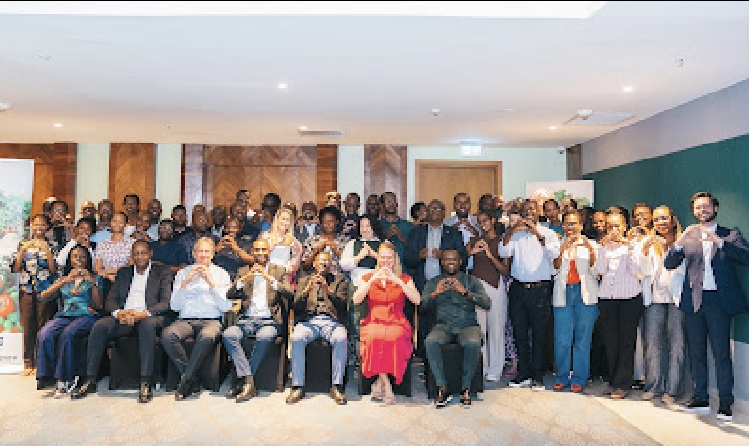
Rwanda is seeking to build on lessons from a five-year programme that helped small businesses turn food and agricultural waste into products ranging from organic fertiliser to bakery products, as the country looks to reduce waste while creating new economic opportunities.
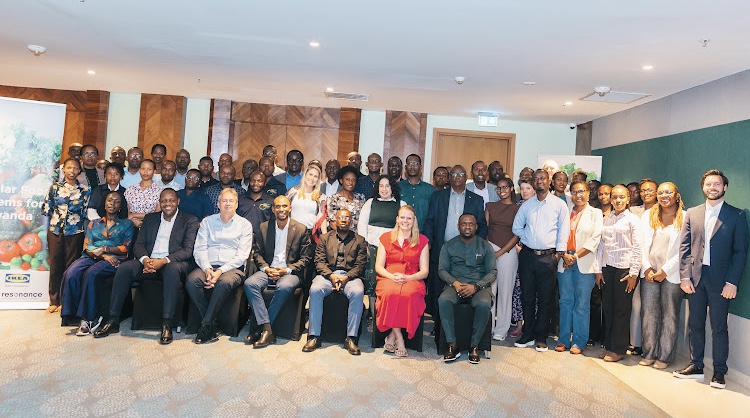
The Circular Economy for Food Systems Transition in Rwanda (CIRF), funded by the IKEA Foundation and led by the World Resources Institute (WRI), formally closed on Sept. 3, but government officials and project partners said the end of the programme should mark a transition rather than an end to the work.
The project brought together WRI, Resonance, the African Circular Economy Alliance, the African Circular Economy Network and the Rwanda Cleaner Production and Climate Innovation Centre to promote circular approaches across Rwanda’s food system.
Over five years, 137 small and medium-sized enterprises applied for technical assistance, with 20 receiving tailored support, according to figures presented at the closing event in Kigali. Eleven SMEs introduced circular products, while seven accessed finance through loans, grants and other instruments, including businesses that obtained S-Mark certification.
The programme also helped push circular economy principles into national strategies and standards, including Rwanda’s fifth Strategic Plan for Agriculture Transformation and international standards on circularity.
From waste to value
For WRI Rwanda Country Director Eric Ruzigamanzi, perhaps the most important change was not a particular product or business, but a shift in how people view waste.
“The biggest change is the way people now see food waste and other resources as opportunities, not just waste,” he said.
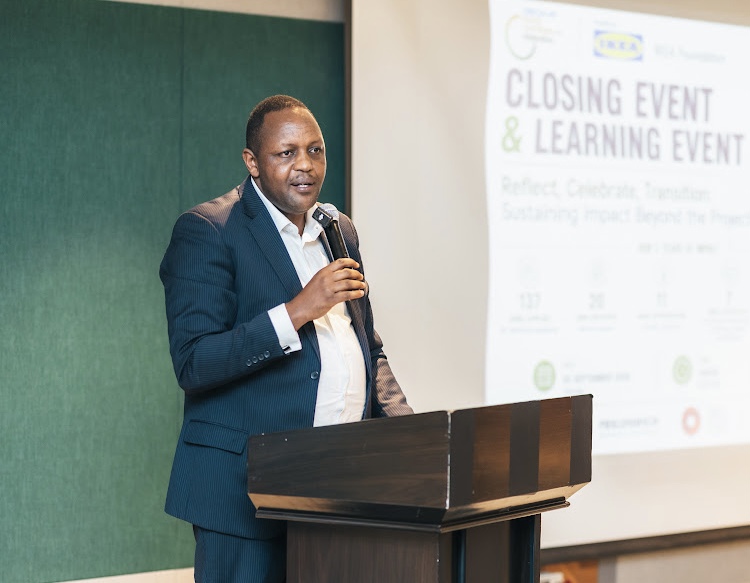
The programme demonstrated that circularity could create businesses, jobs and new revenue streams, he said, adding that the challenge now was to move successful ideas beyond pilots and into wider markets.
“A good circular business idea is not enough,” Ruzigamanzi said. Businesses also need access to finance, reliable markets, appropriate technology, quality standards and dependable supplies of raw materials.
That lesson was evident in testimonies from businesses that participated in the programme.
One company producing banana chips said more than 30% of its production had previously been wasted. With technical assistance, it developed banana bread from the smaller chips that had been considered unsuitable for sale.
The new product is now on the market and, at optimum production, can generate about $6,000 in monthly revenue, according to the company. Four people have been employed in its production.
The company said the intervention also reduced the production cost of its banana chips by about 25%.
Its next goal is to use by-products from banana and maize processing to develop animal feed.
“This has helped us learn that what we call a loss can turn into a profitable product if we have the idea and the capacity to apply practical solutions,” the company’s representative, Emanuel Leonsenco, told the event.
Organic fertiliser and new markets
Other businesses focused on agricultural waste and organic fertiliser.
Elim Plus Farm Ltd said training received through the programme enabled it to produce between 25 and 27 tonnes of organic fertiliser a month.
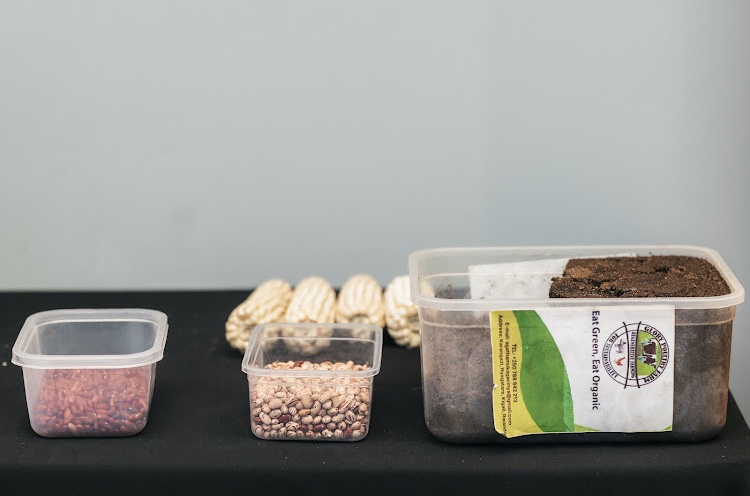
The farm currently uses the fertiliser itself, but said it has already received requests from potential buyers.
The company estimated that its monthly production could be worth about 2.7 million Rwandan francs if sold.
The farm also credited the programme with helping it access trade exhibitions, where it said it gained 20 new customers and generated additional revenue.
At Growing Plenty Farm, a 38-hectare mixed farm, the business said it had been working to move away from heavy use of chemical inputs towards organic production.
The farm, which has 40 permanent employees and about 200 casual workers, received training in areas including black soldier fly farming, composting and financial record-keeping.
The business said the shift was not easy because production could initially decline when changing farming practices, but it was now producing its own organic fertiliser and sharing the knowledge with neighbouring farmers.
The examples reflect the broader premise of the CIRF programme: agricultural residues and food waste can become inputs for other economic activities rather than being discarded.
Dr Robert Mbeche, Director of Food Programme at WRI in Africa, said circular food systems seek to prevent waste and keep resources in use throughout the food chain.
“Circular food system, basically in very simple language, is that nothing goes to waste,” he said.
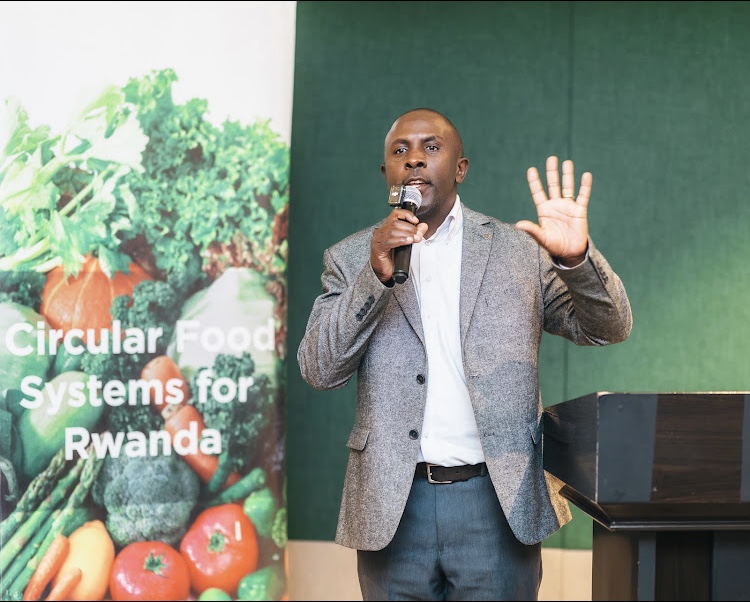
That can involve preventing food losses, improving production and distribution, or converting unavoidable waste into useful products such as compost, biofertiliser, animal feed or energy.
The approach also has environmental implications. Organic waste dumped in landfills can decompose and generate greenhouse gases, Mbeche said.
But he argued that the economic case may be particularly important for businesses.
“For SMEs, they make more money. They reduce the cost of their businesses,” he said.
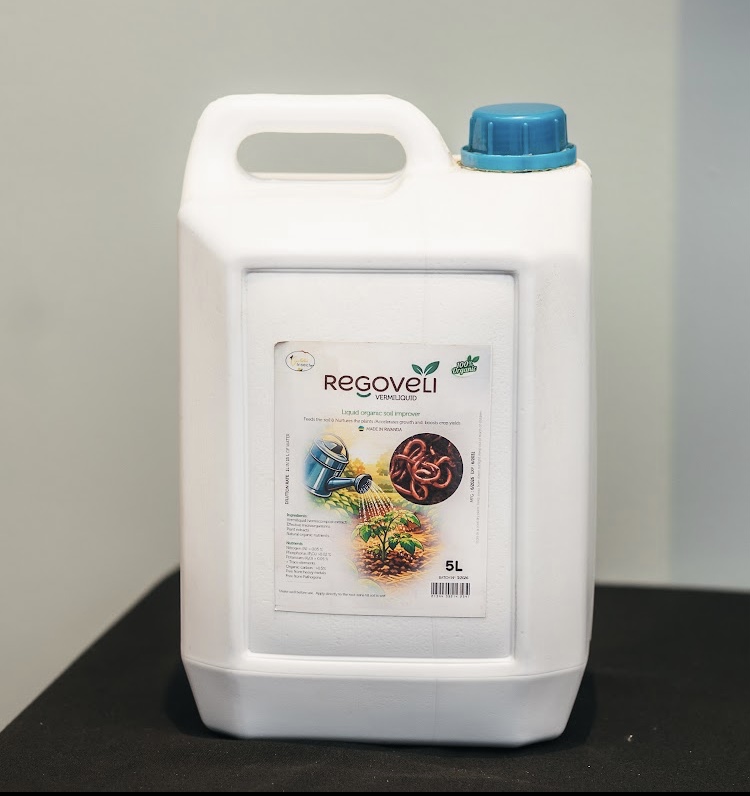
WRI has previously reported that small businesses supported through CIRF developed products including compost, pellets and bakery items, with some creating new income streams and reducing operating costs. 
The challenge of scaling
While the programme helped demonstrate what circular businesses can do, participants acknowledged that many barriers remain.
Ruzigamanzi said CIRF’s experience showed that moving from promising ideas and pilot projects to commercial scale was one of the biggest challenges.
Businesses need customers willing to buy their products, financing to invest in equipment, technology, reliable raw materials and standards that allow products to enter markets, he said.
The programme therefore increasingly focused on the wider ecosystem rather than individual businesses.
“We need to look at the whole ecosystem, not just the individual business,” Ruzigamanzi said, pointing to the roles of government, investors, financial institutions, businesses and development partners.
That experience was reflected by Ineza Mushroom, which said it had initially sold mushroom-growing tubes to farmers. After mushrooms were harvested, the tubes became waste.
Through CIRF, the company received technical assistance on transforming the used material into organic compost.
The company also received support to expand its customer base and improve access to raw materials. It said its customers increased from 134 to 334 and the number of cooperatives it worked with rose from four to seven.
A connection facilitated through a study tour helped the company secure a more consistent supply of raw materials, increasing production from about 3,000 to 5,000 units a day, according to its testimony.
Such experiences illustrate why financing and market connections remain central to the next stage of Rwanda’s circular economy ambitions.
Government sees environmental and food-security links
Philippe Kwitonda, Director General for Land, Water and Forestry at Rwanda’s Ministry of Environment, said the programme had also demonstrated the connection between waste management, agriculture and environmental protection.
Household waste that is not properly managed can contribute to pollution and emissions, he said.
But separating biodegradable waste from non-biodegradable materials creates opportunities to use organic material in agriculture.
“Although this project has now come to an end, it has left behind important lessons that can continue to support this journey,” Kwitonda said.
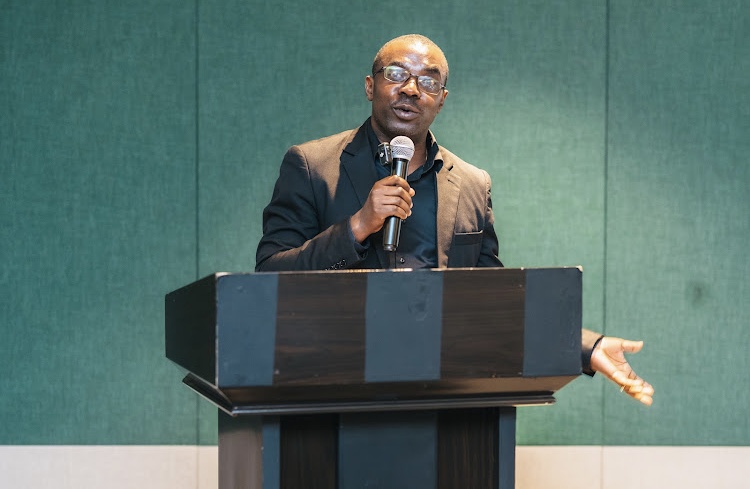
He stressed that Rwanda’s waste-management challenge had not been solved by the programme.
“We cannot say that the problem has been completely solved,” he said, adding that the government would continue encouraging people to make better use of agricultural and household waste.
For Kwitonda, this is the essence of the circular economy: rather than throwing something away, resources should be reused to create something else of value.
He also highlighted the importance of partnerships between government institutions, businesses, academia and other stakeholders.
“There is no achievement if there is no partnership,” he said.
The connection between environmental protection and food security was another theme of his remarks. Agriculture depends on functioning ecosystems, including soil organisms and pollinators, meaning that protecting natural resources is part of maintaining food production, he said.
Building beyond the project
The next test for CIRF will be whether the businesses, partnerships and policy work it supported can continue without the project’s funding and structure.
Ruzigamanzi said the answer would depend on ownership.
Businesses need to remain commercially viable and have access to markets and finance. Government needs to incorporate lessons from CIRF into existing policies, programmes and standards, while partnerships need to continue beyond the project, he said.
“So, for me, the next step is to move from a project approach to a system approach — where circularity becomes part of how Rwanda does business, rather than something that depends on one project or one source of funding,” he said.
To help maintain that momentum, the programme has established several mechanisms for the post-project period.
Mbeche said the Ministry of Trade is expected to host a National Circular Economy Platform with a food cluster, while knowledge generated through CIRF is being consolidated into a Knowledge Hub.
A CIRF alumni community is also being established to keep businesses, institutions and practitioners connected.
The initiatives are intended to preserve the relationships and knowledge developed over the five-year programme and create a platform for further collaboration.
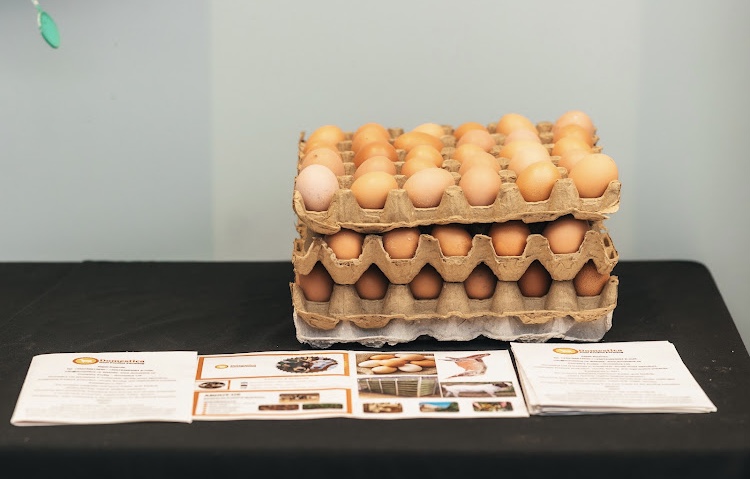
WRI’s existing work in Rwanda describes the broader objective as making food production more regenerative, reducing food loss and waste, and putting commonly wasted resources to productive use. 
From demonstration to scale
The government says the foundations for that transition are already being built.
At the closing event, officials from the environment and agriculture ministries said circular economy principles are increasingly reflected in national strategies and that the government intends to continue supporting sustainable agricultural production, innovation and circular business models.
For Ruzigamanzi, that represents a significant change from where Rwanda was when CIRF began.
Five years ago, he said, partners were still trying to find simple ways to explain the concept of circular economy to farmers, entrepreneurs, policymakers and financial institutions.
Today, businesses are demonstrating circular models, government institutions are incorporating circularity into policy and standards, and a network of actors has emerged around the concept.
WRI has also described Rwanda’s experience as a potential model for wider transformation, noting that the next challenge is to move from individual businesses and pilot interventions towards system-level change. 
“The question now is how we move from demonstration to scale,” Ruzigamanzi said.
That could determine whether the project’s legacy extends beyond the 137 businesses that engaged with it.
For the businesses involved, the argument is already tangible: a discarded banana can become bread, a used mushroom-growing tube can become compost, agricultural residues can become fertiliser, and what was once considered a cost can become another source of income.
As Rwanda closes the five-year programme, the task now is to make those examples less exceptional — and turn circularity into a normal part of how food is produced, processed and valued.
For more photos, please click here




Related Articles
Three Miners Missing After Flooding at Kayonza Mine in Rwanda
Three miners were missing this Sunday after water flooded an underground mine...
Uwimanimpaye Cyiza Marie ClemenceOctober 11, 2026 
Permagardens offer a new start for drought-hit families in coastal Kenya
By Afia Agyapomaa Ofosu MBUGUNI, Kenya – For families in Mbuguni, a...
Uwimanimpaye Cyiza Marie ClemenceOctober 8, 2026 
Rwanda and Senegal deepen economic ties, with agriculture and standards in focus
KIGALI, Oct. 8, 2026 – Rwanda and Senegal have signed 11 agreements...
Uwimanimpaye Cyiza Marie ClemenceOctober 8, 2026 

Proposed Climate Insurance Could Cushion Rwanda’s Mine Workers Against Rainy-Season Income Losses
A proposed climate insurance scheme could help protect mine and quarry workers...
Uwimanimpaye Cyiza Marie ClemenceSeptember 30, 2026
Leave a comment